

At a Glance
Safari (!!) – This trip was a dream come true, and it still sets a high bar for future trips. I went with a very good friend, and we had an absolutely amazing time. I’d use the phrase “once-in-a-lifetime,” but I intend to make sure it happens again.
Working with a Nairobi-based company, we arranged a personalized itinerary. It included three parks in Kenya: Tsavo West, Amboseli, and the Maasai Mara. With the exception of tips and drinks, it was all inclusive. We then added a day in Nairobi at the beginning and end of the safari, plus a few days in Zanzibar. Why Zanzibar? Well, you have to treat yourself to a few days at the beach after a safari. Everyone knows that.
Story
Nairobi – We flew into Nairobi and had one full day before our safari started. We hired a driver to go to the Giraffe Centre and Elephant Orphanage. The Giraffe Centre is connected to the famous Giraffe Manor, which can be seen in the distance. For the price of an entrance fee and bag of pellets, you can get close up to a giraffe. Or, place a pellet in your mouth to get a kiss from a giraffe. I highly recommend it.
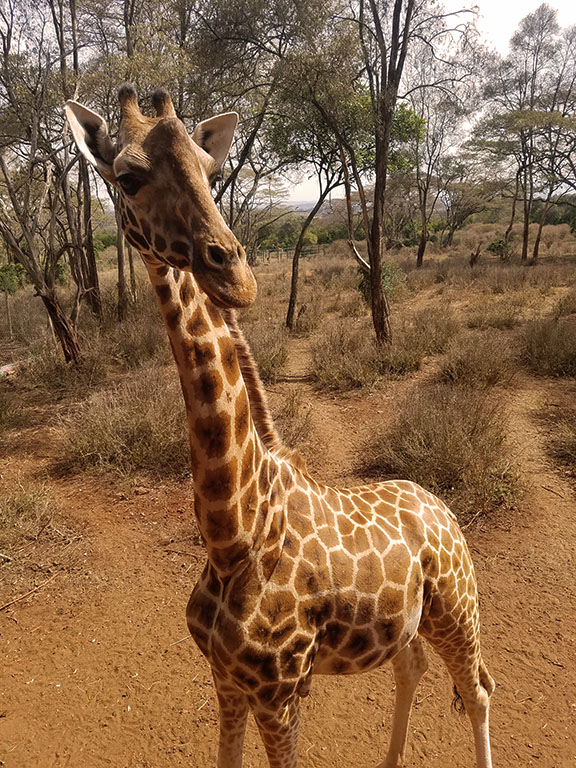

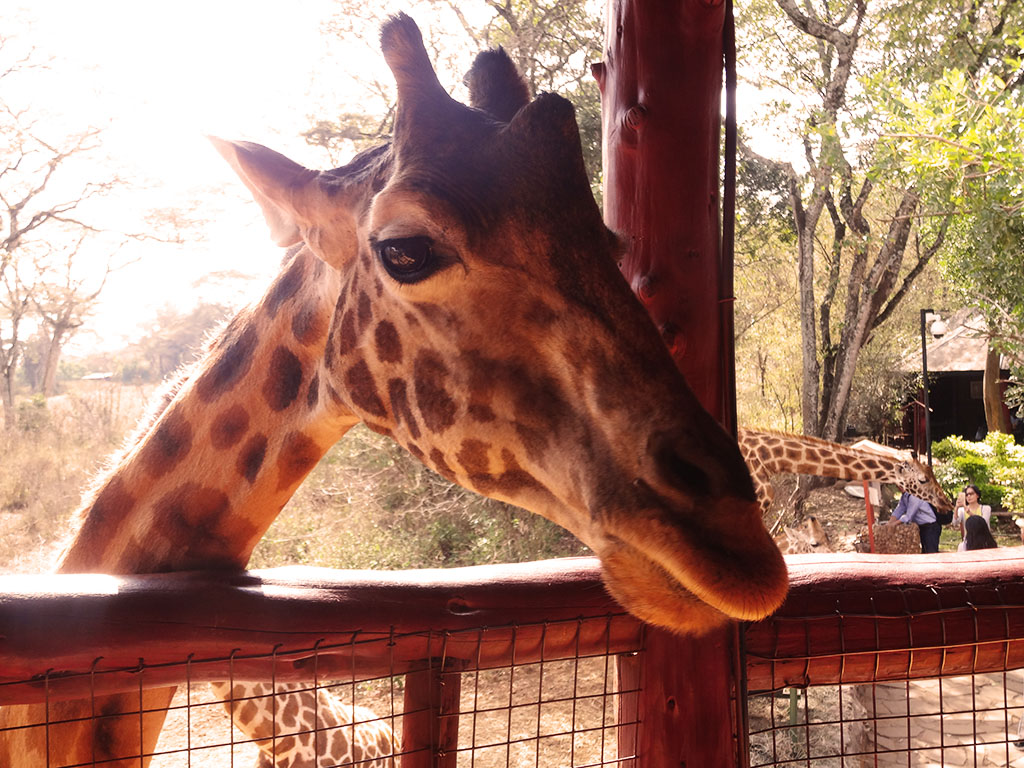
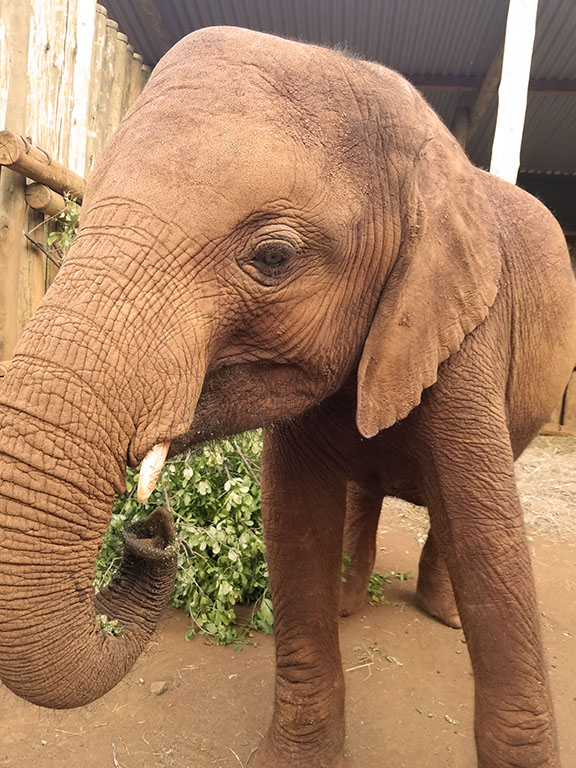
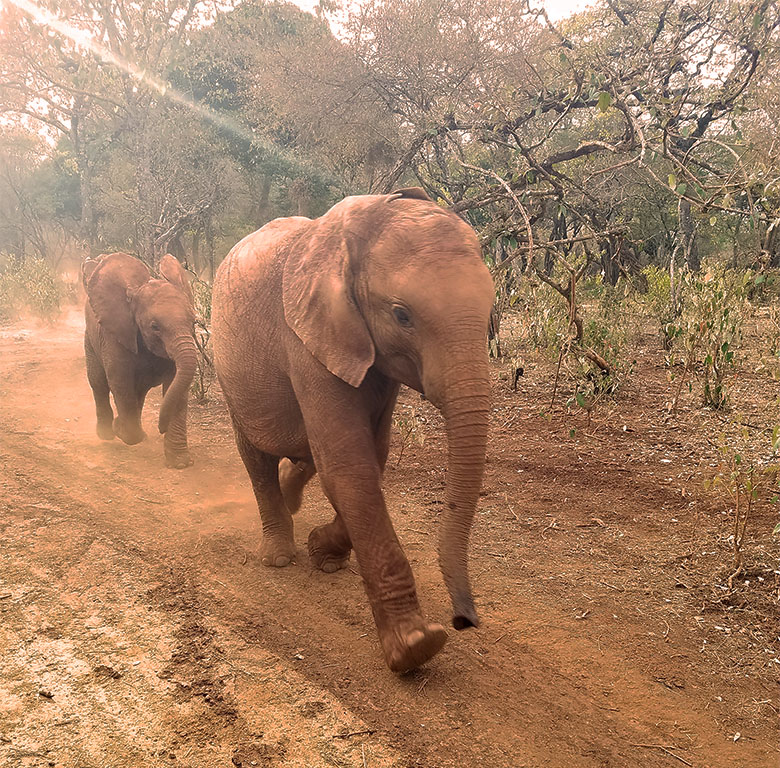
After spending time with the giraffes, we braved the Nairobi traffic to go to the famed elephant orphanage run by the Sheldrick Trust. Amongst their many efforts, they raise orphaned elephants and return them to the wild. Baby elephants live on milk for years, so the loss of a mother means the loss of the calf. These babies are brought to the orphanage where they receive lots of milk bottles and the company of other orphaned baby elephants. Daily forays into the surrounding park teach them the skills needed to later reintegrate back into the wild. There are two daily viewings, and you should make an appointment. The first viewing is mid-day and only costs a few dollars. The second viewing is in the early evening when the babies are brought back into the stockades. This viewing limits the number of attendees and gives better access, but you must foster at least one elephant for a year ($50). My friend and I fostered a few elephants and thoroughly enjoyed being able to wander around the orphanage grounds during the second viewing. At that time, the orphanage was also home to a baby giraffe, a blind rhino, and a small gang of ‘pumbas.’
Tsavo West – Ronnie, our fabulous driver guide, picked us up at our Nairobi hotel the next morning. He would not only drive us to Tsavo West and Amboseli but would also be our safari guide while at the parks. He was a great driver, had a wonderful sense of humor, and was super knowledgeable about the animals and parks. We thoroughly enjoyed our time with him. Though it’s a bit of a drive out to Tsavo, we made it to the Kilaguni Serena Safari Lodge by about lunch time. It’s a large lodge with lots of open decks that look down on a watering hole. You just sit there, and the animals come to you! It almost seemed like the various herds had appointments. One herd would come, hangout, and then leave as another herd arrived. After lunch we went out on our first safari drive which ended with our first lion sighting. The next day was our full day in Tsavo West, and we did safari drives in the morning and afternoon. This is where we saw our first wild rhino, or more accurately, we got charged by our first wild rhino! But no fear, Ronnie knew what he was doing! By the time we left Tsavo, we had seen 4 of the Big Five animals. We were only missing the leopard, which (spoiler alert) would remain elusive throughout the whole trip.
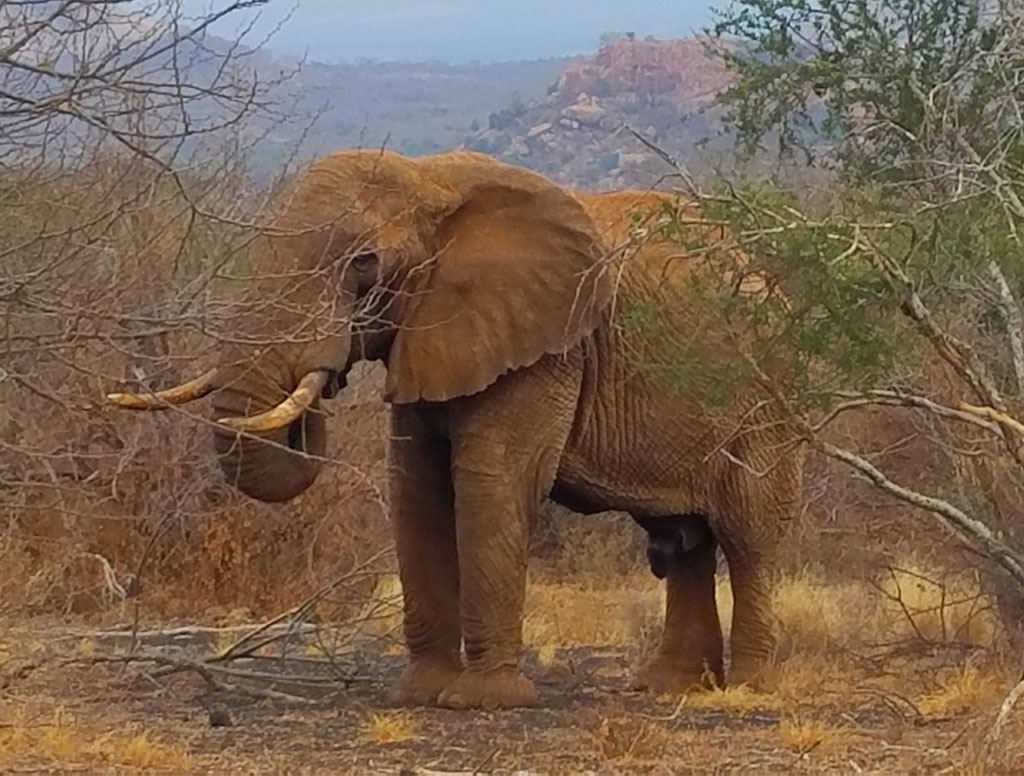
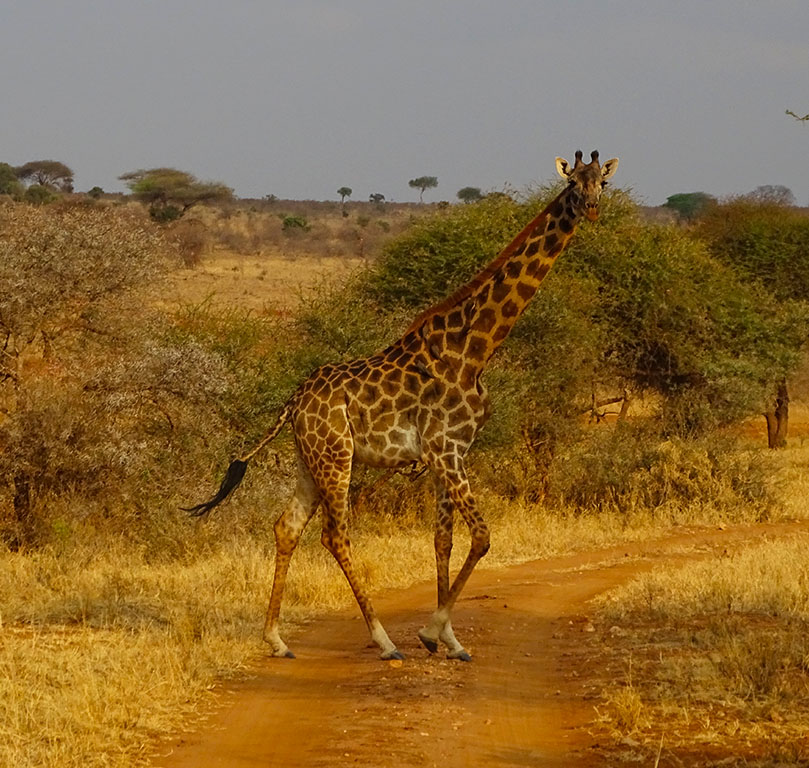

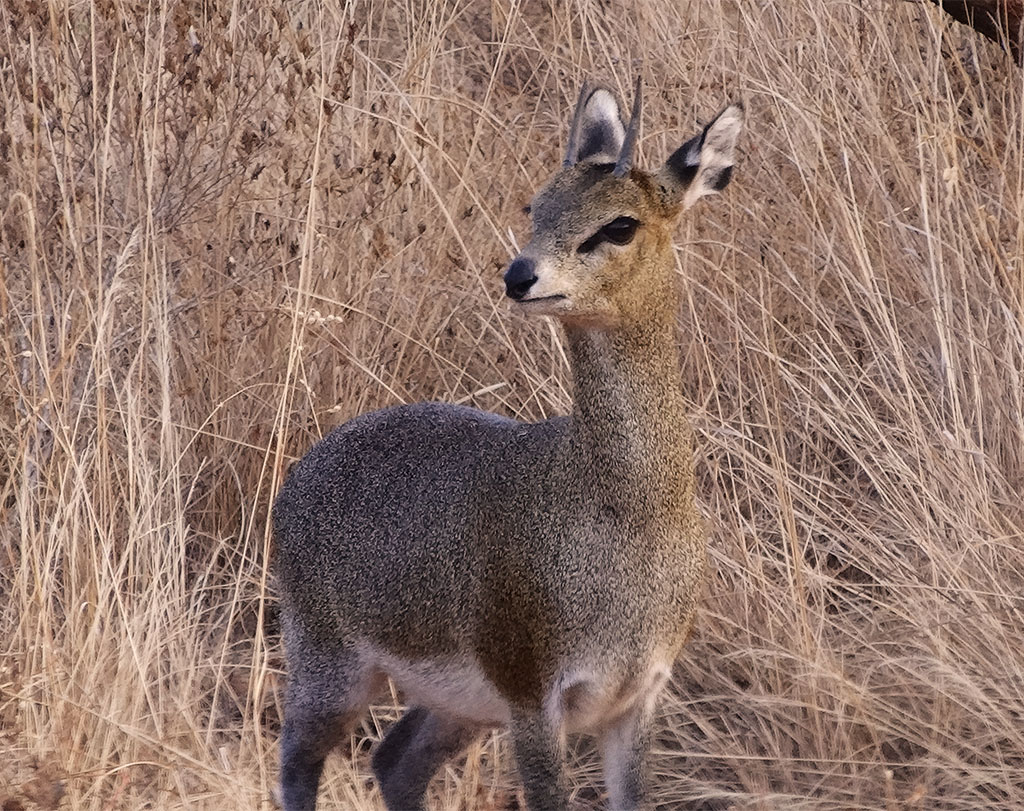
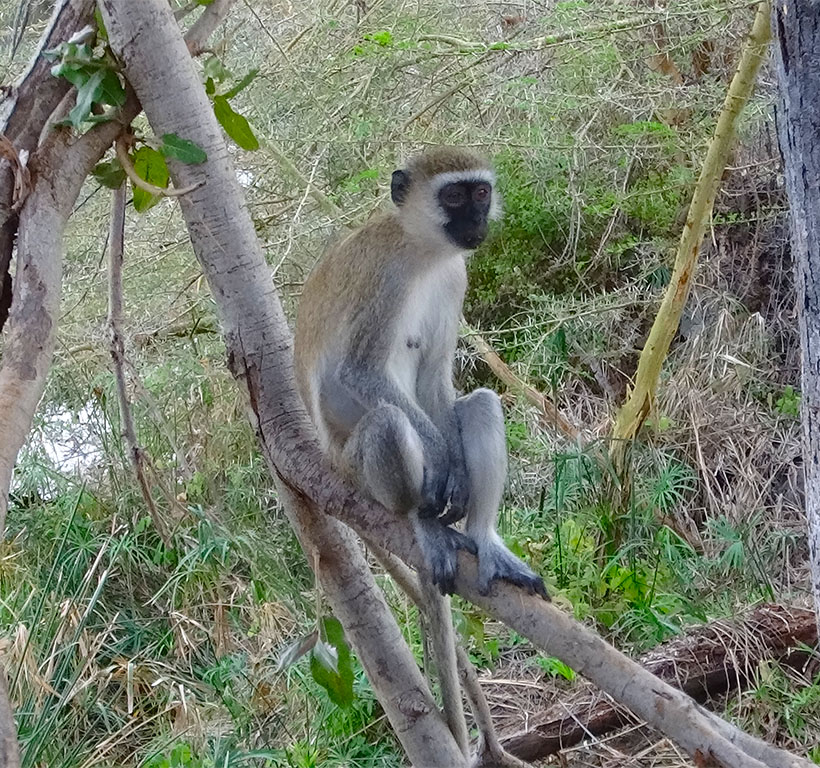
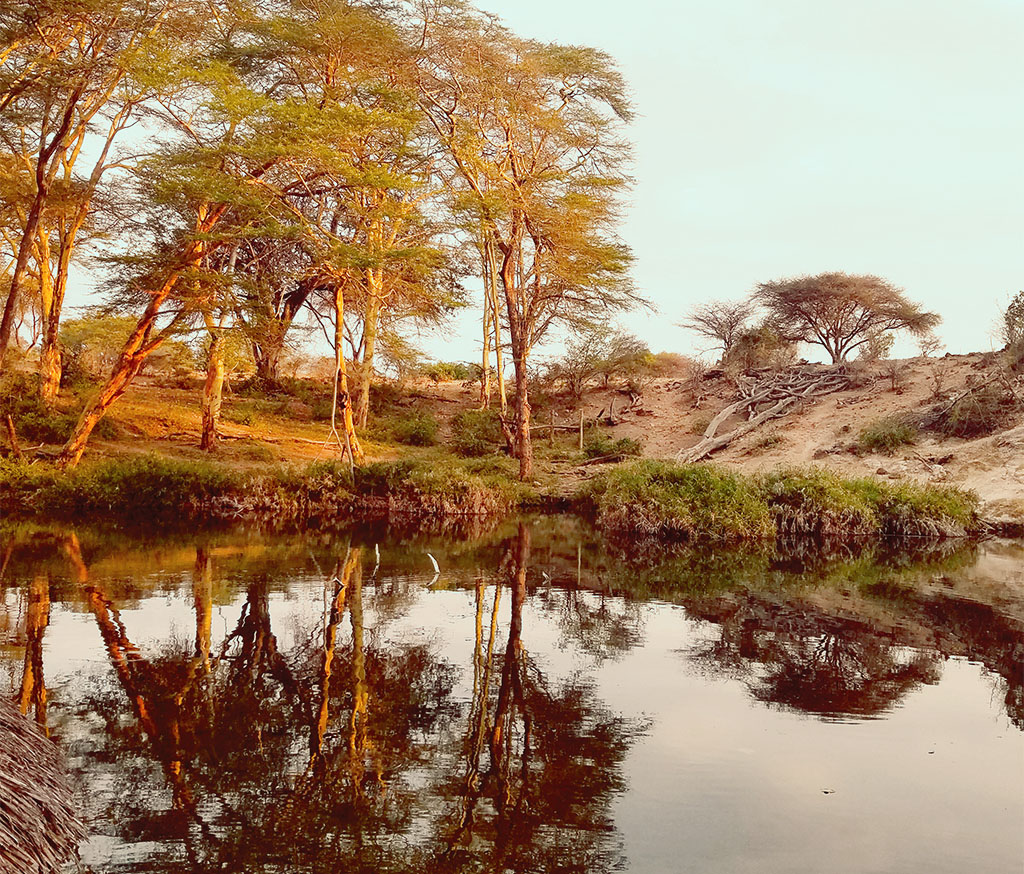
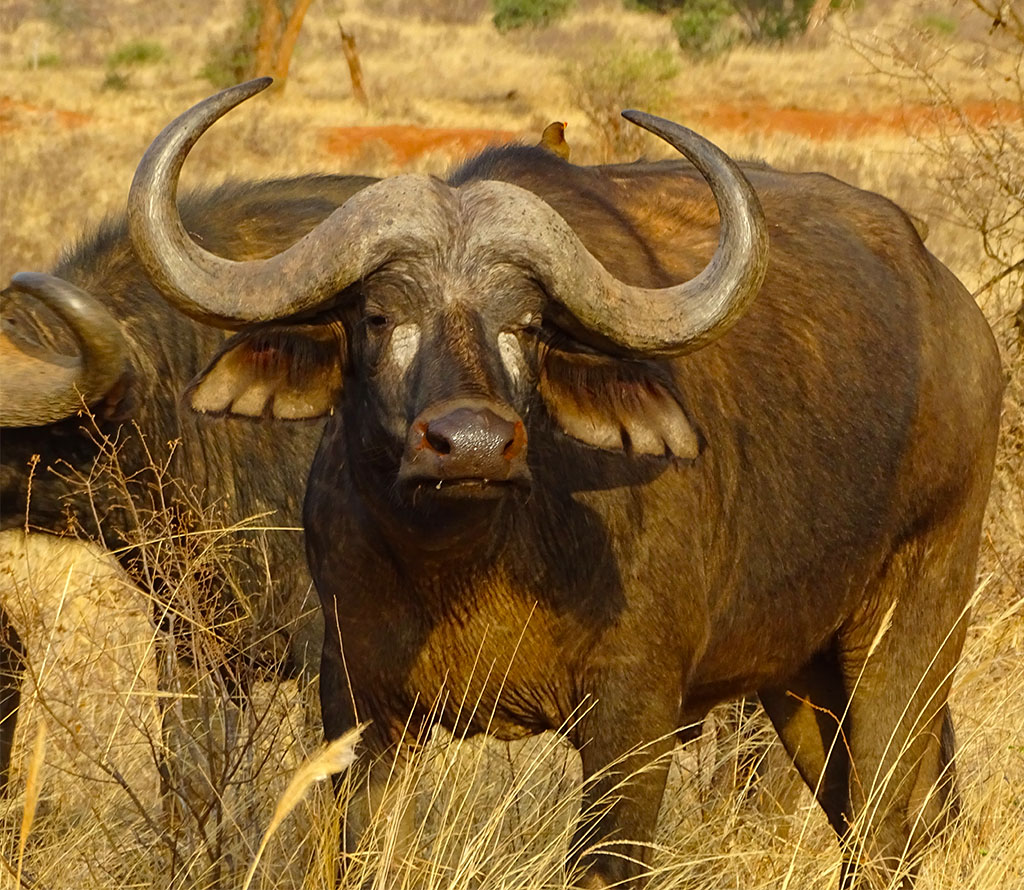
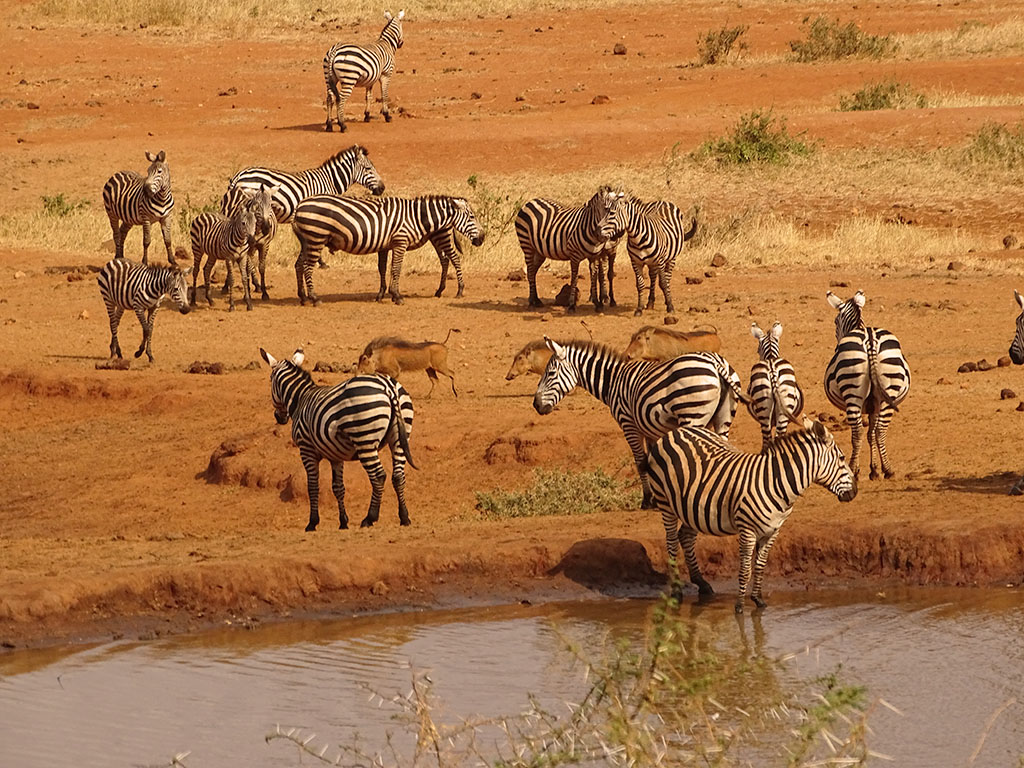
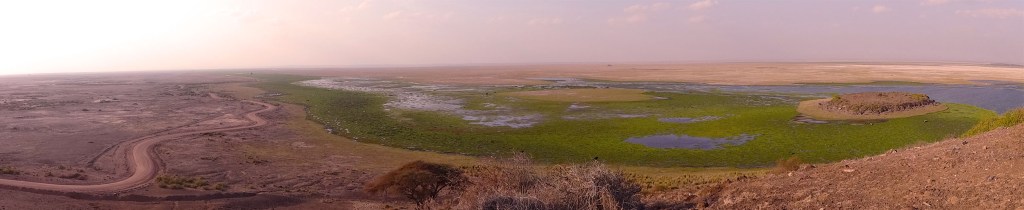
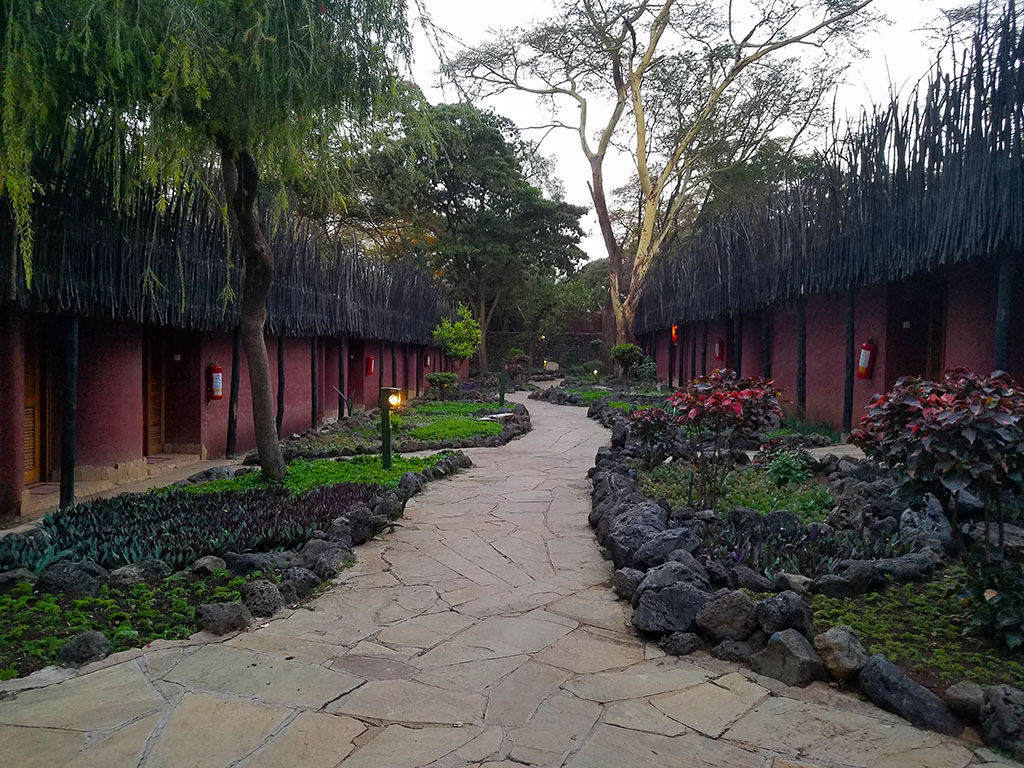
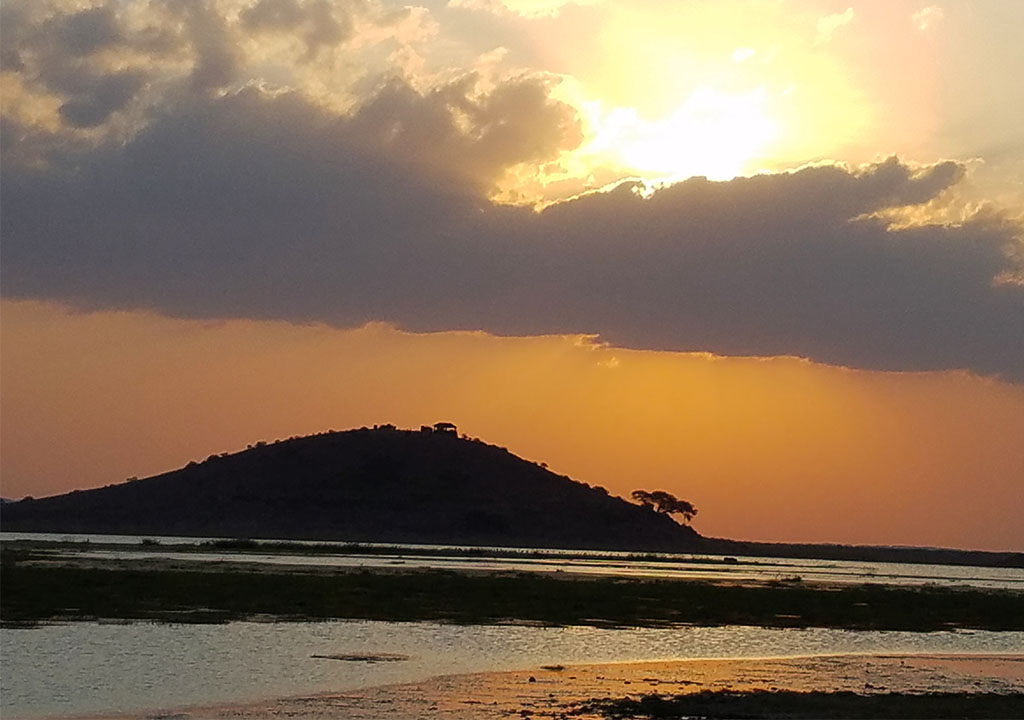
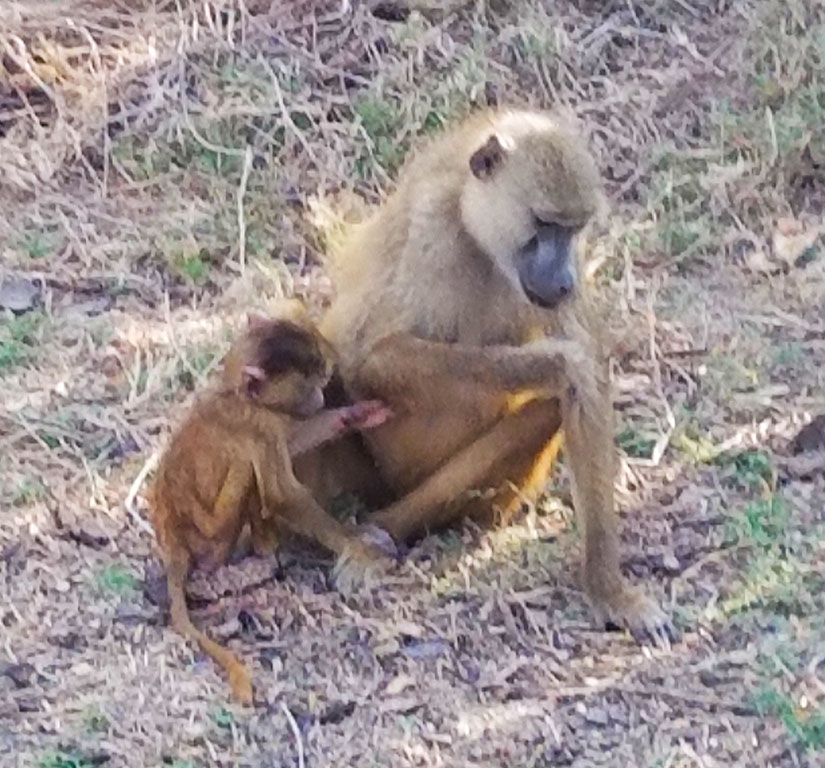
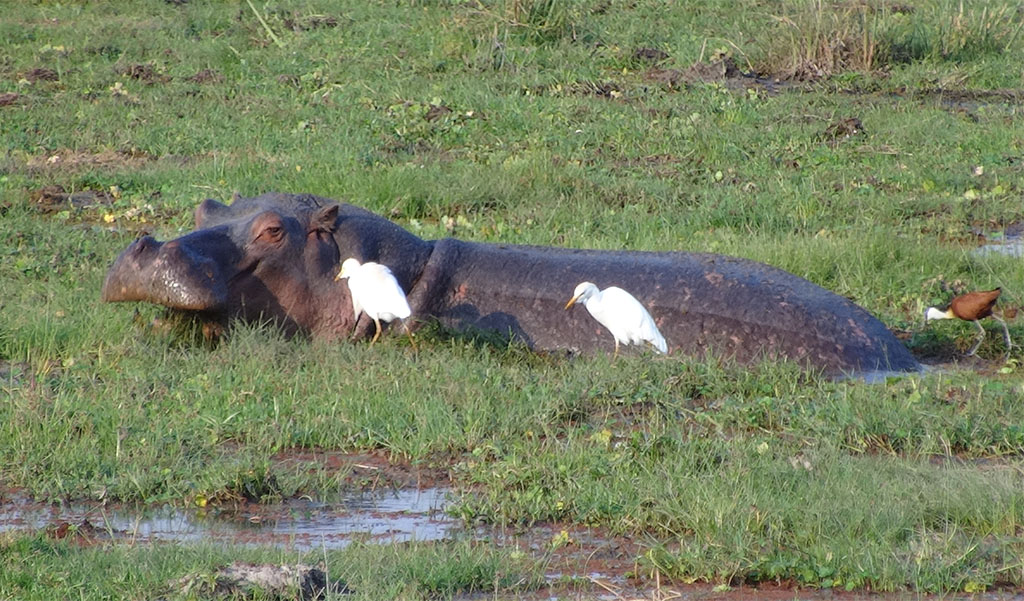
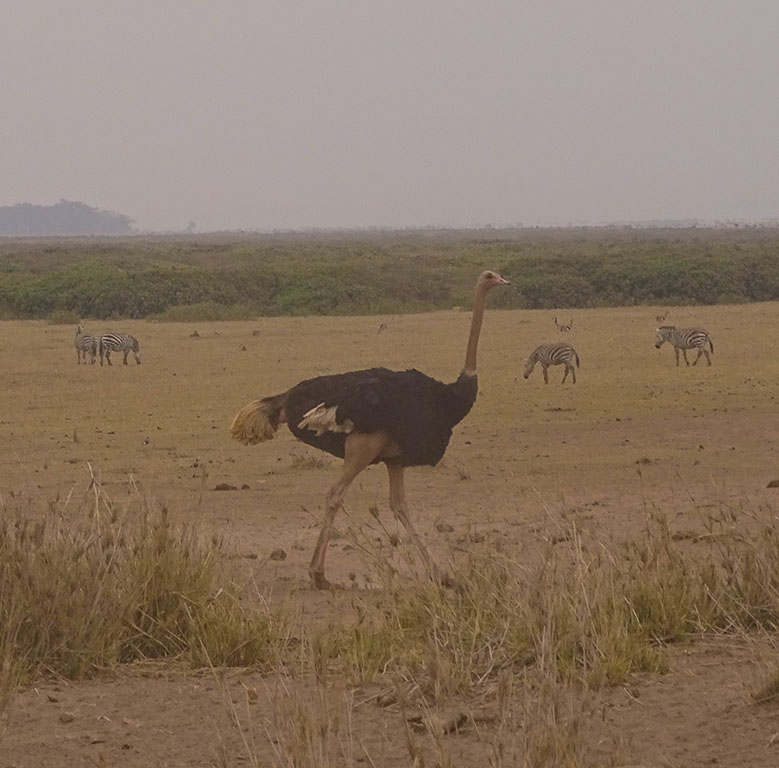
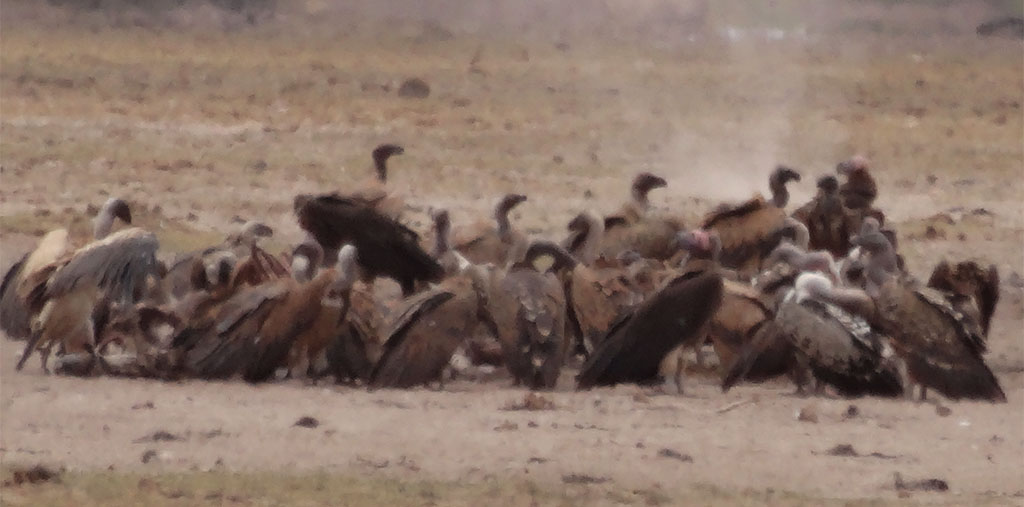
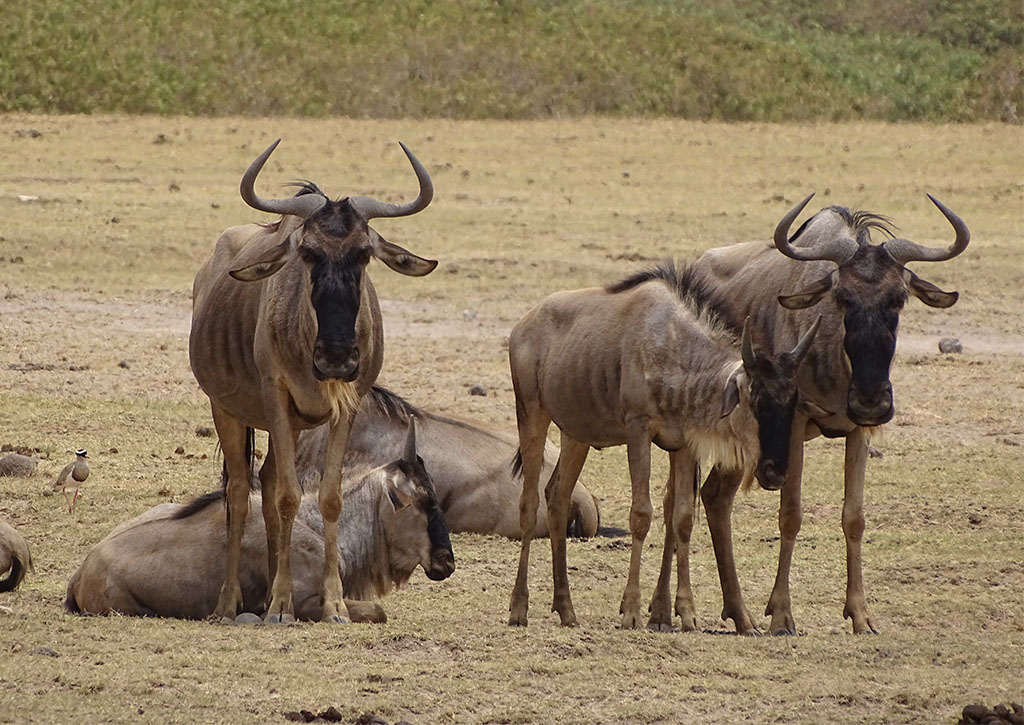
Amboseli – We awoke in Tsavo West and headed out early to ensure a lunchtime arrival at Amboseli. A lunchtime arrival means an afternoon drive. We stayed at the Amboseli Serena Safari Lodge, a sister property to our Tsavo West digs. The lodge and accompanying grounds felt almost tropical, complete with small wild monkeys. This park and lodge also have Mt. Kilimanjaro as a backdrop. Wow! The terrain at Amboseli is flat but diverse. Some of it was desert dry and other parts were marshes. A lookout point, on top of the one hill in the park, allowed us to see the demarcation between the wet and dry areas. (See below.) During the rainy season, Lake Amboseli emerges from the marshy areas and spreads into the park. On our afternoon drive, we had our first sightings of baboons, wildebeest, ostriches, jackals, and vultures. We also saw hippos and elephants swimming in the marshes and animal carcasses that got picked clean in just a few hours. There are lots of scavengers in Amboseli! During our two safari drives on the next day, we continued to explore this unique park.




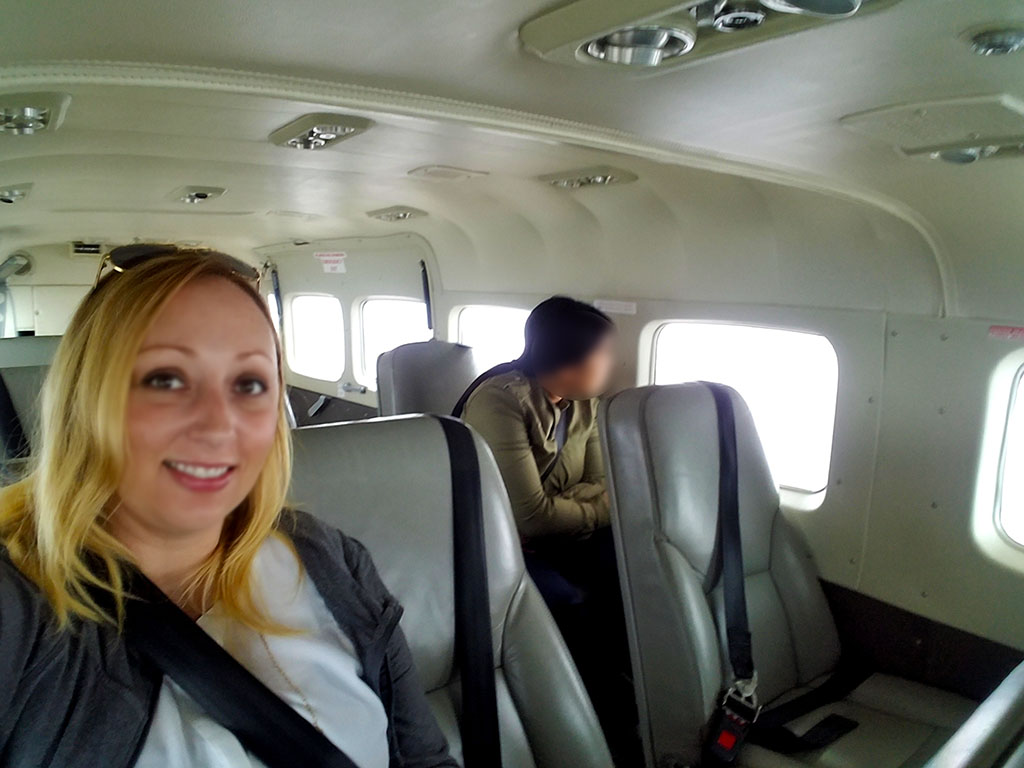
Maasai Mara – The best park was most definitely saved for last. Ronnie drove us back to Nairobi and dropped us off at a small regional airport. The guy who checked us in joked about our charter flight, but he was only partially joking. We were the only passengers on a very small plane, so it kind of was a charter! We flew into Kichwa Tembo and stayed at the Bateleur Camp, which is run by &Beyond. We were welcomed at the landing strip by Bateleur staff. An impressive table of snacks and drinks were laid out for just the two of us, and we enjoyed a mimosa while the staff loaded our luggage into a vehicle. A few minutes later, our new driver guide arrived to take us on an afternoon drive while our luggage moved on to Bateleur.

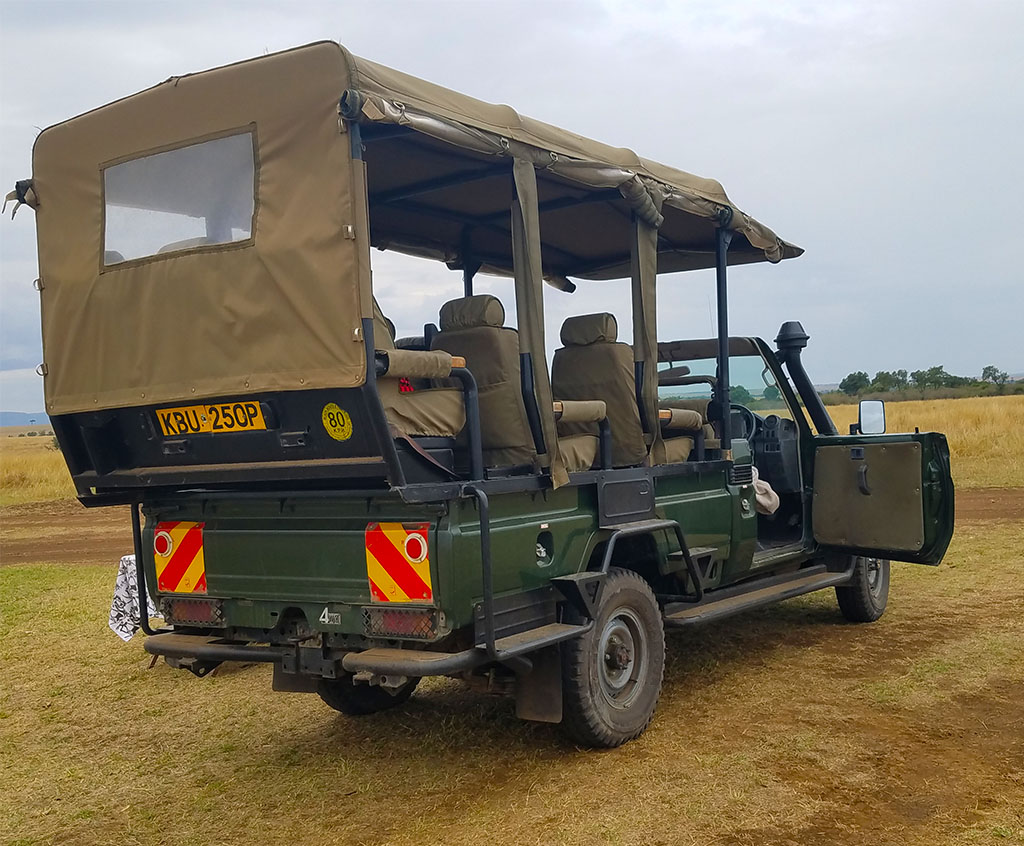
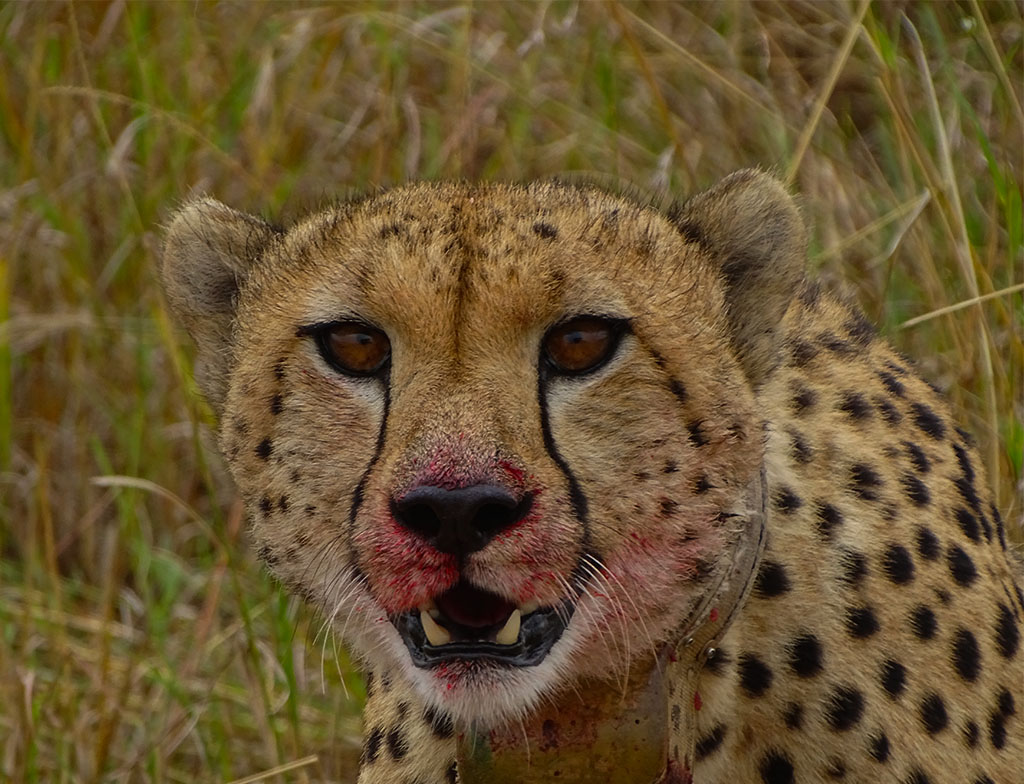
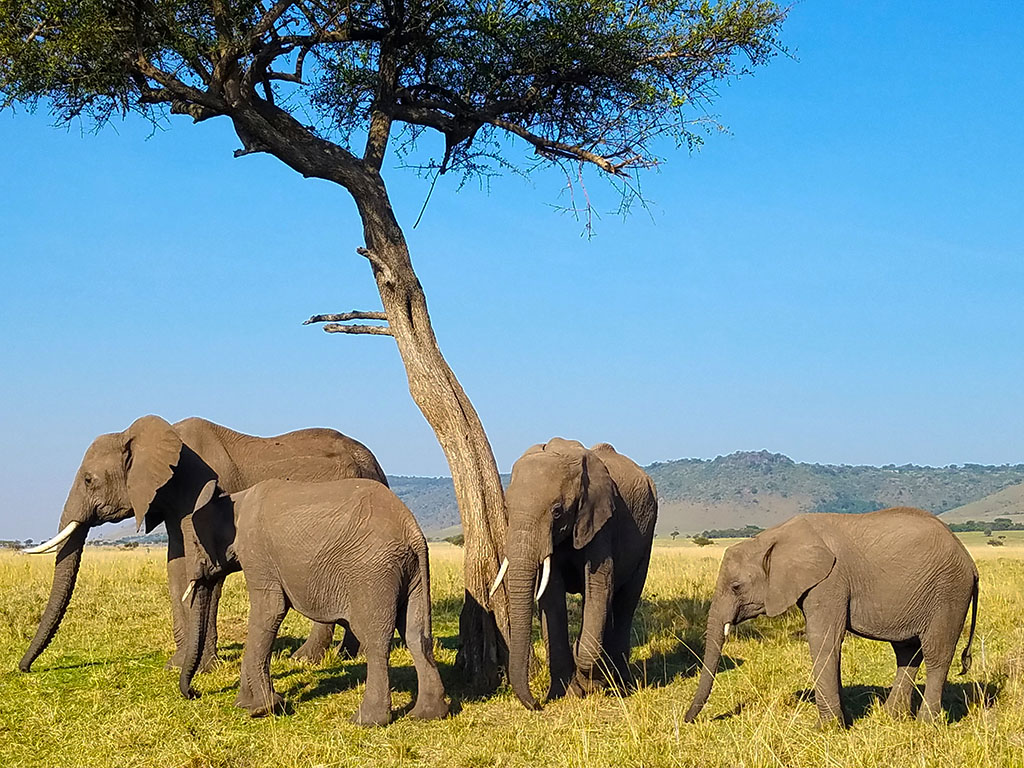
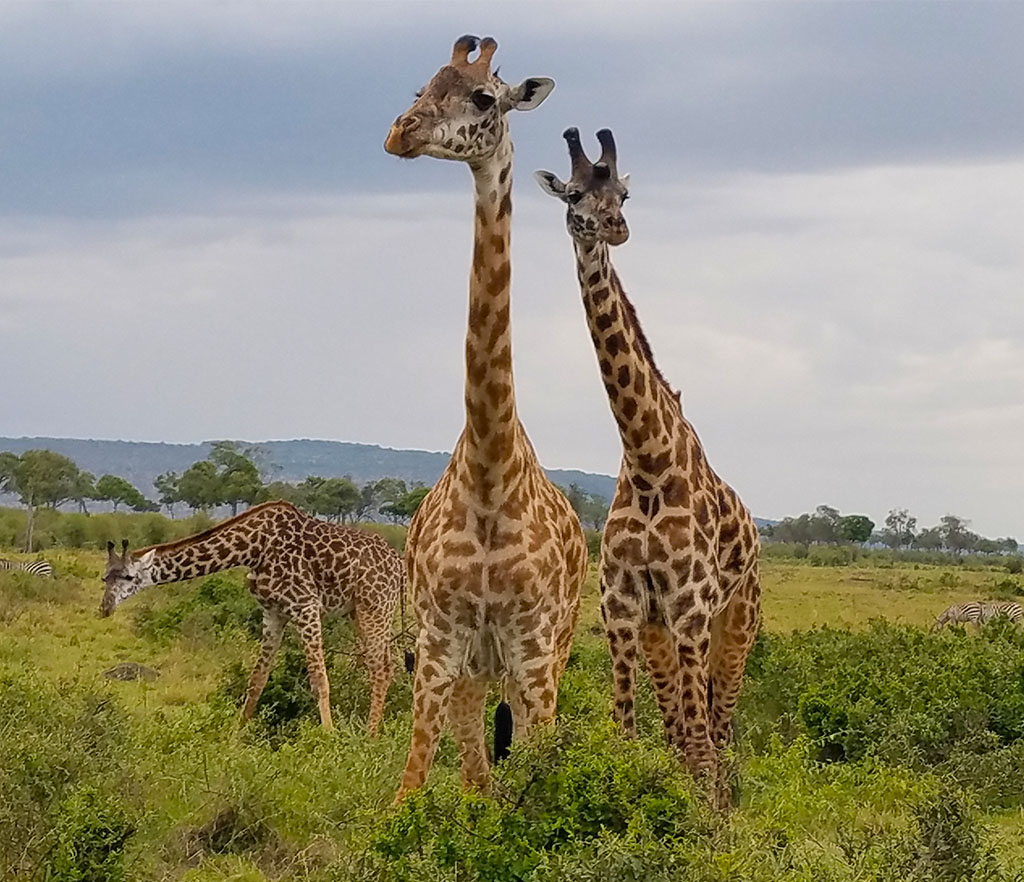
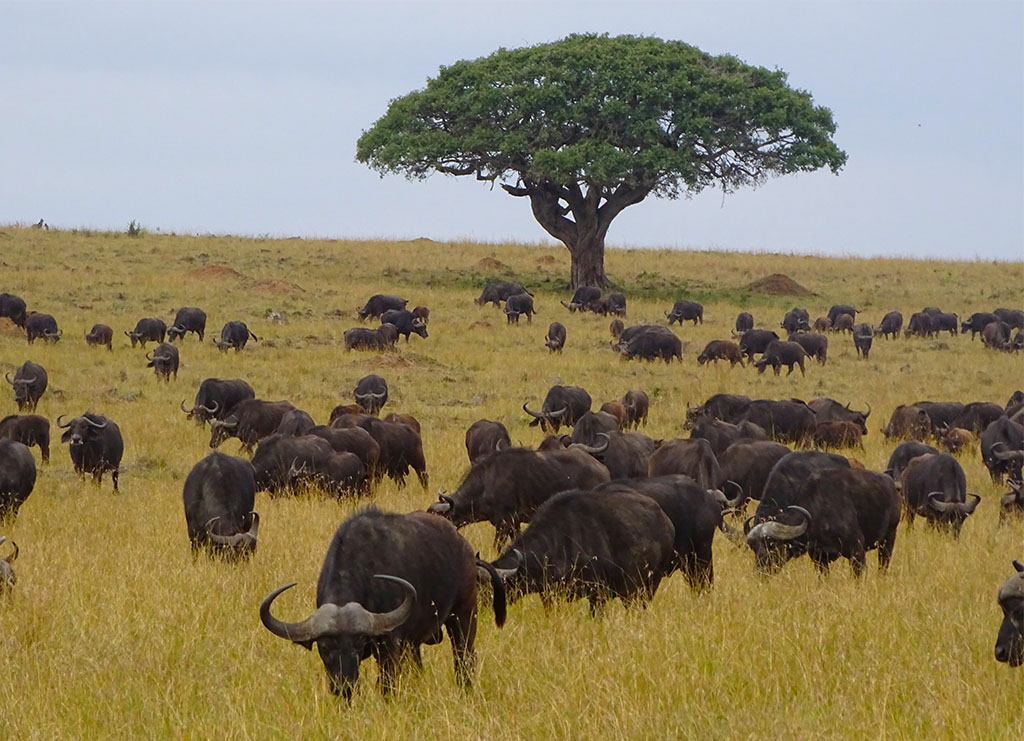
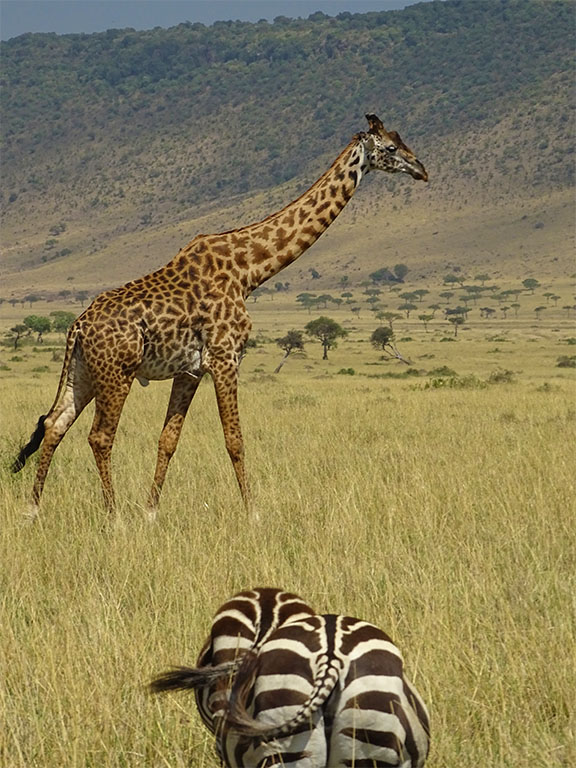
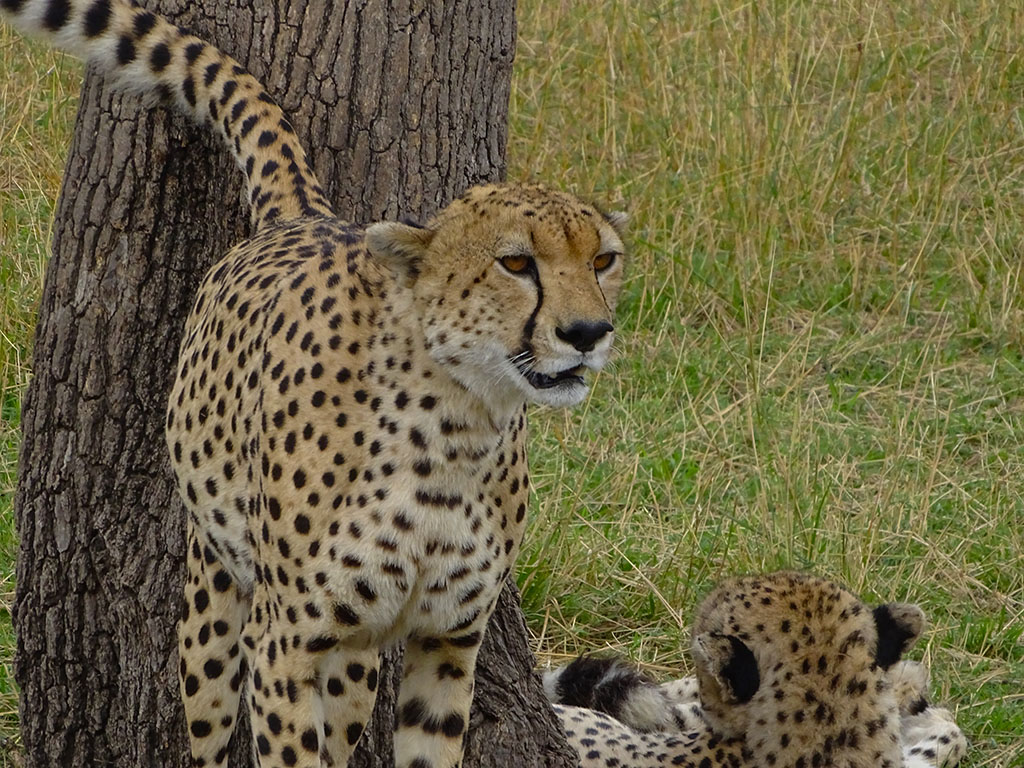
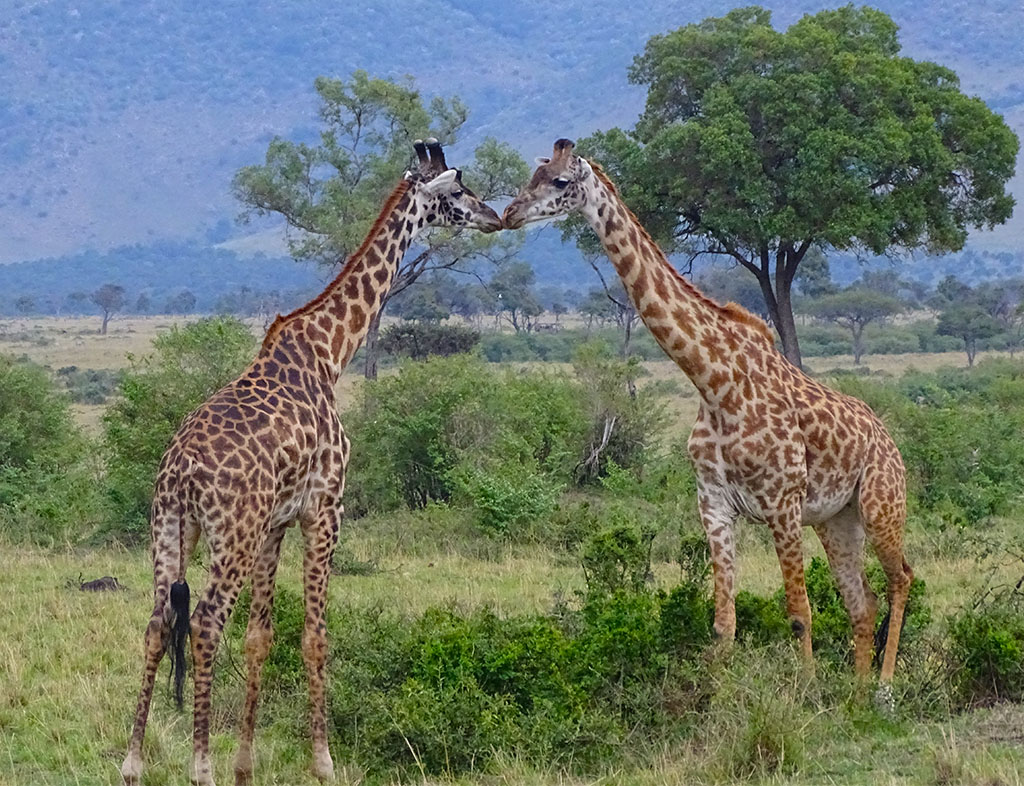
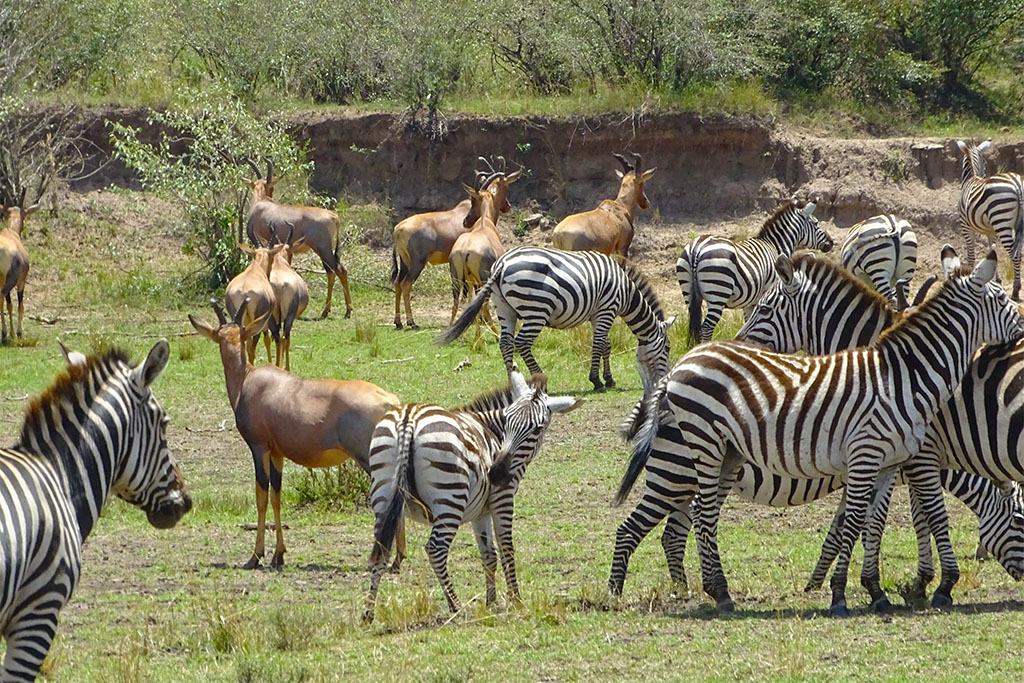
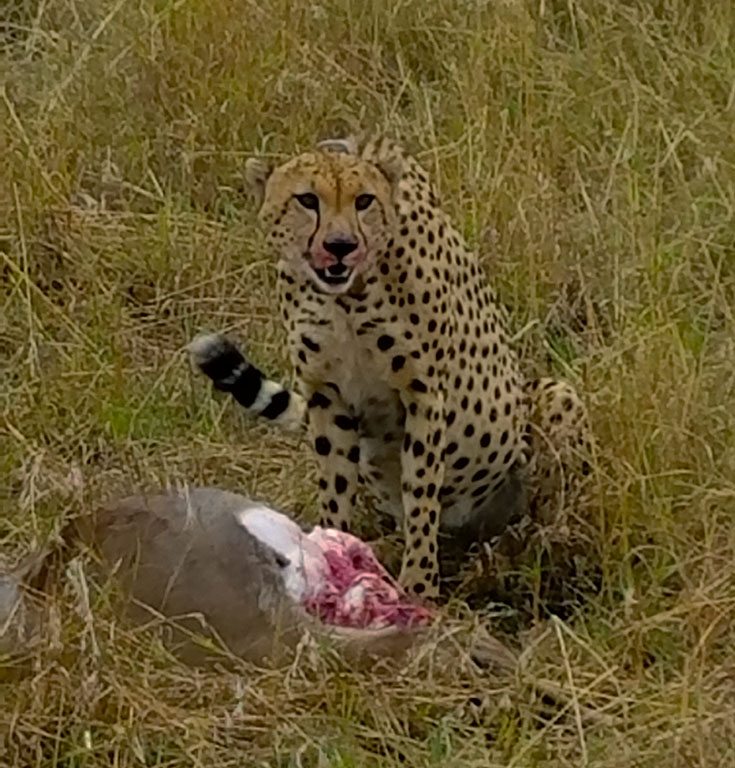
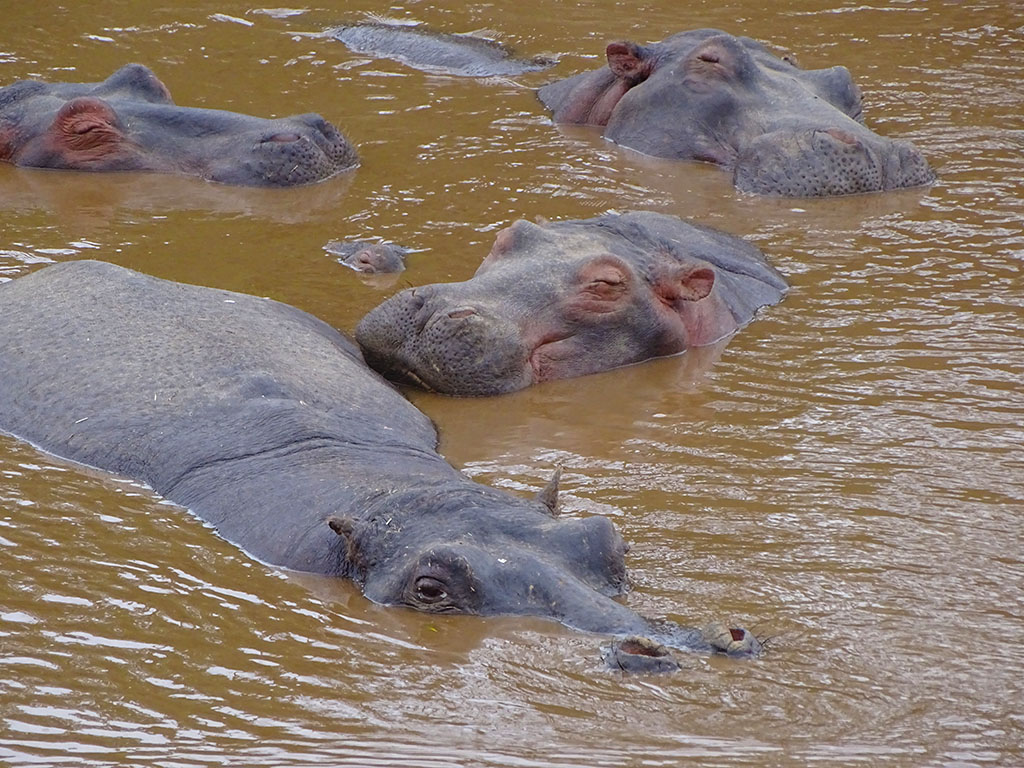
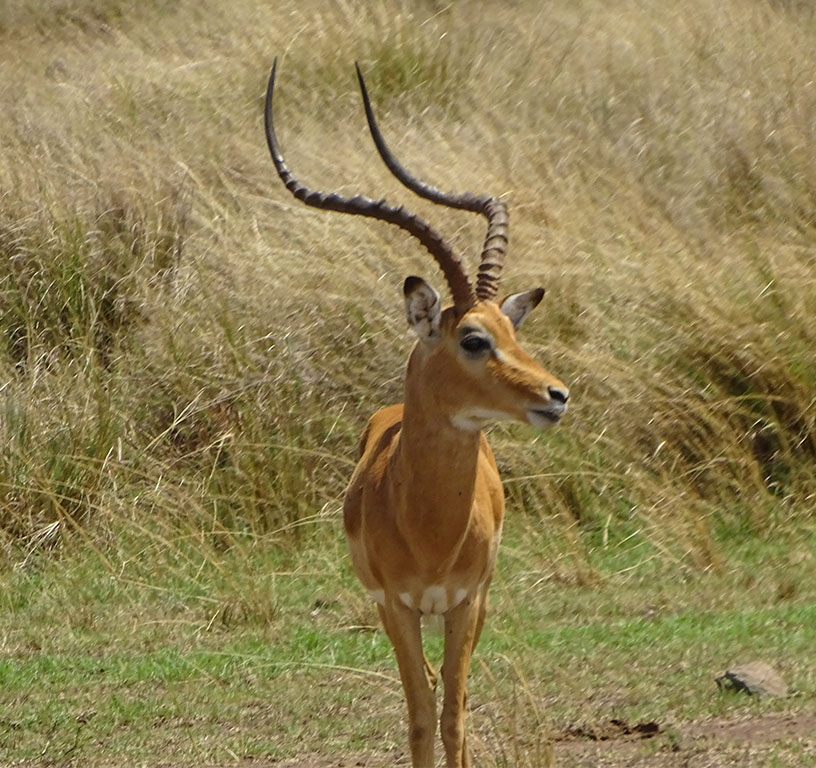
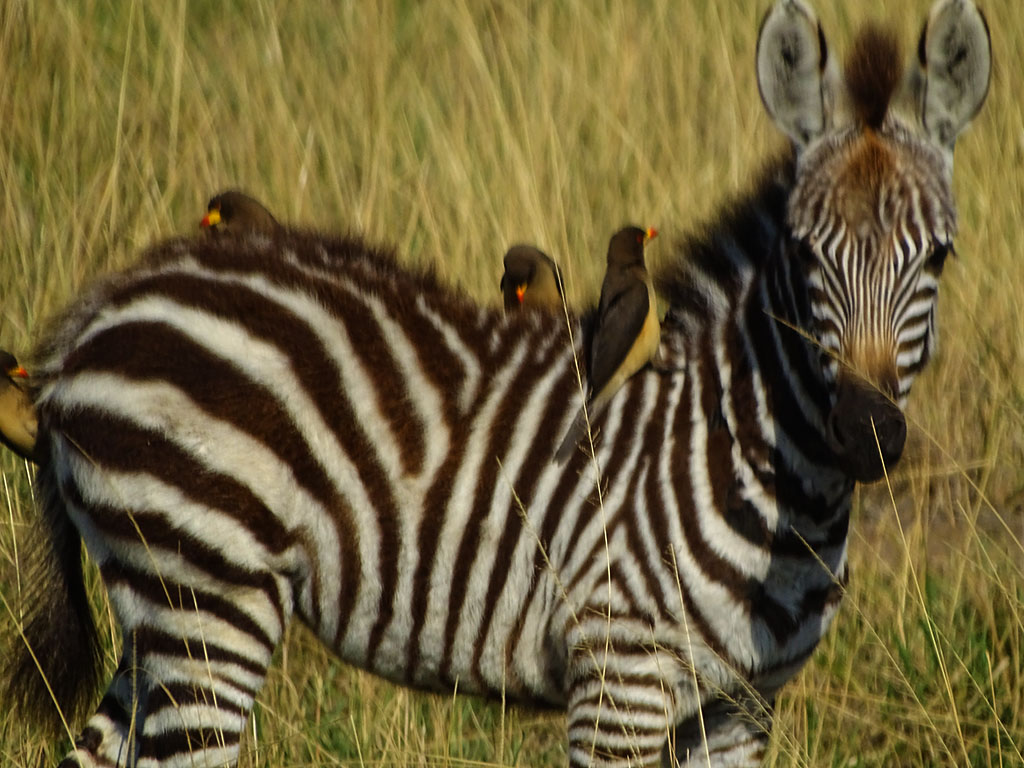
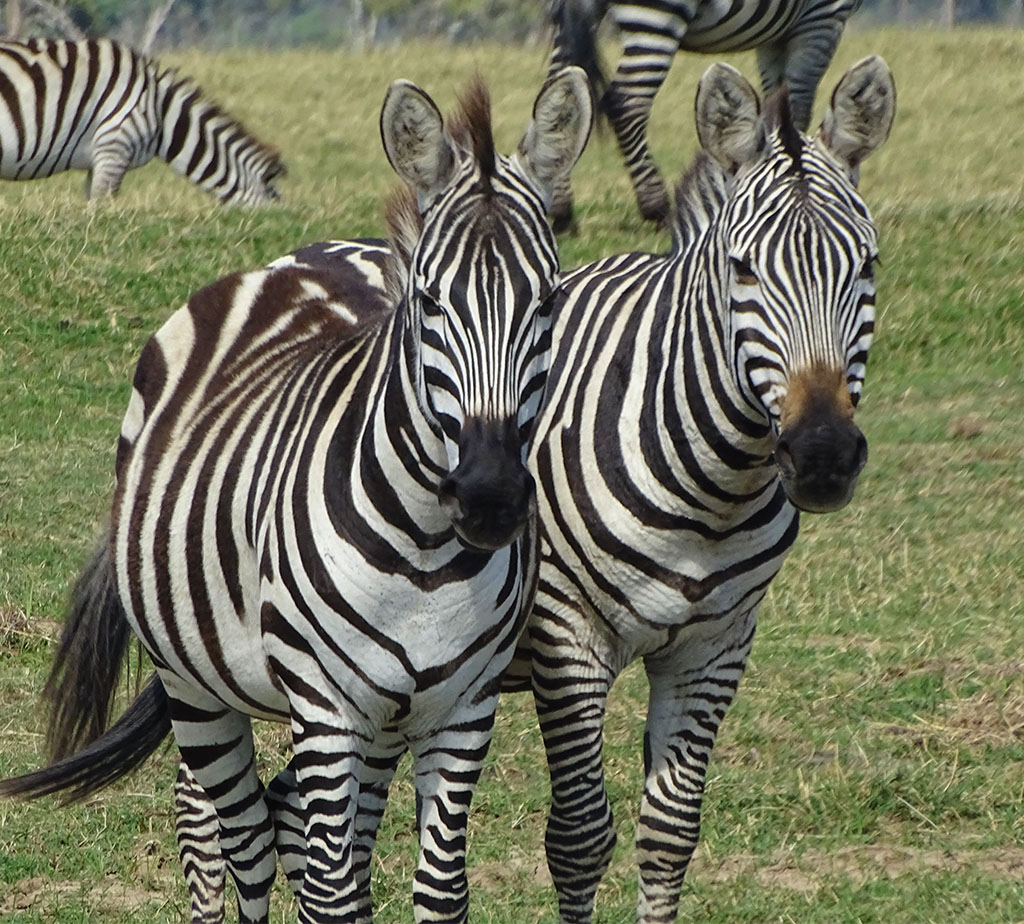
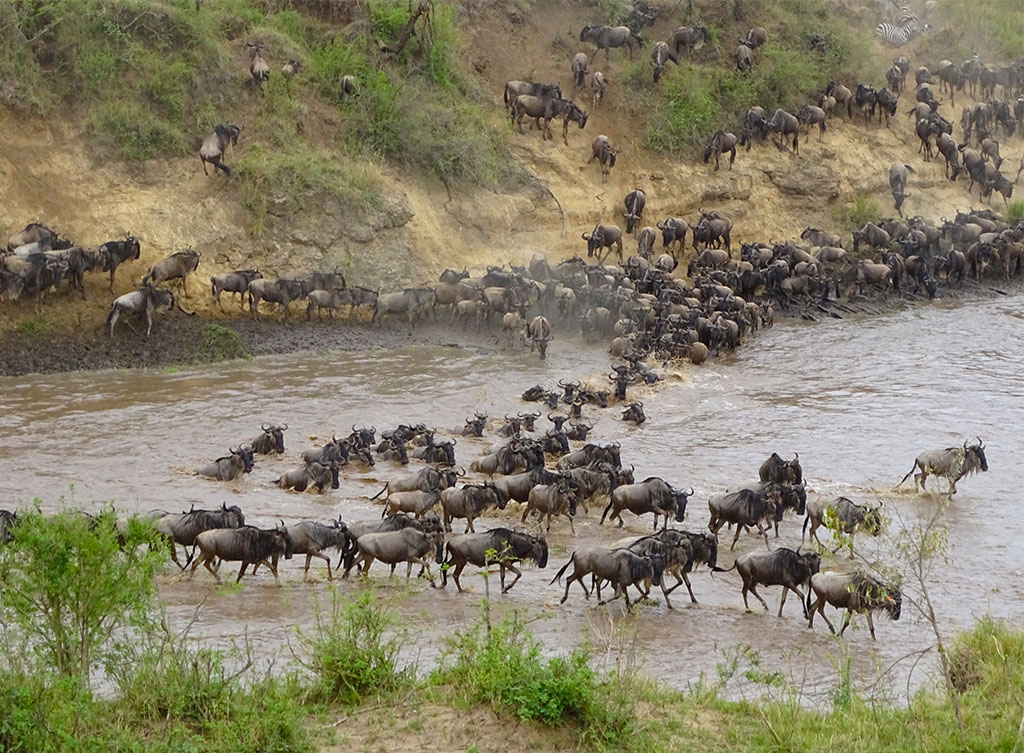
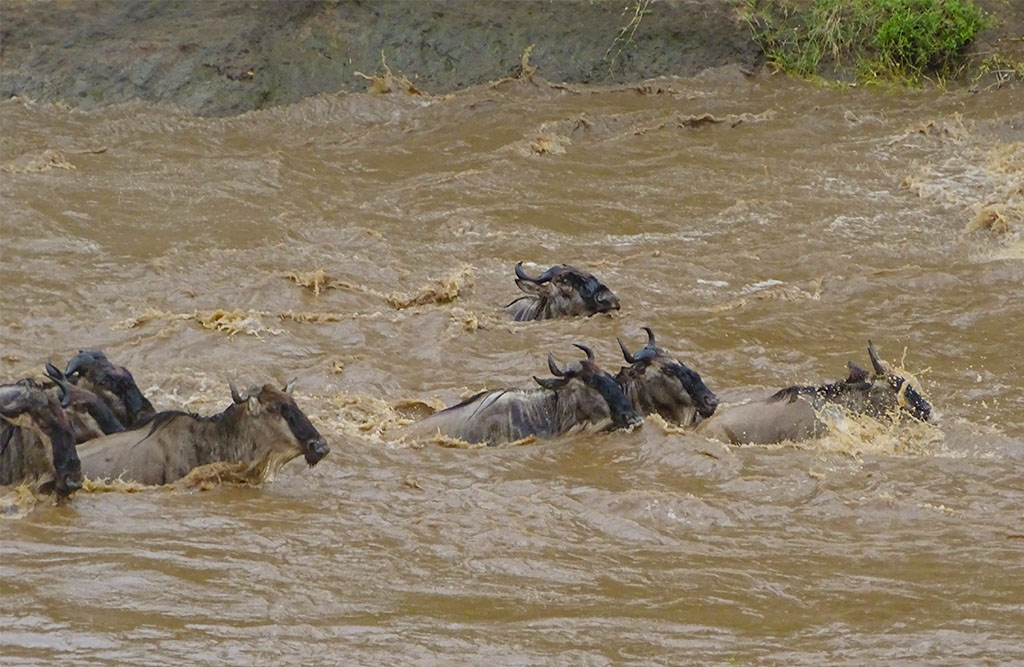
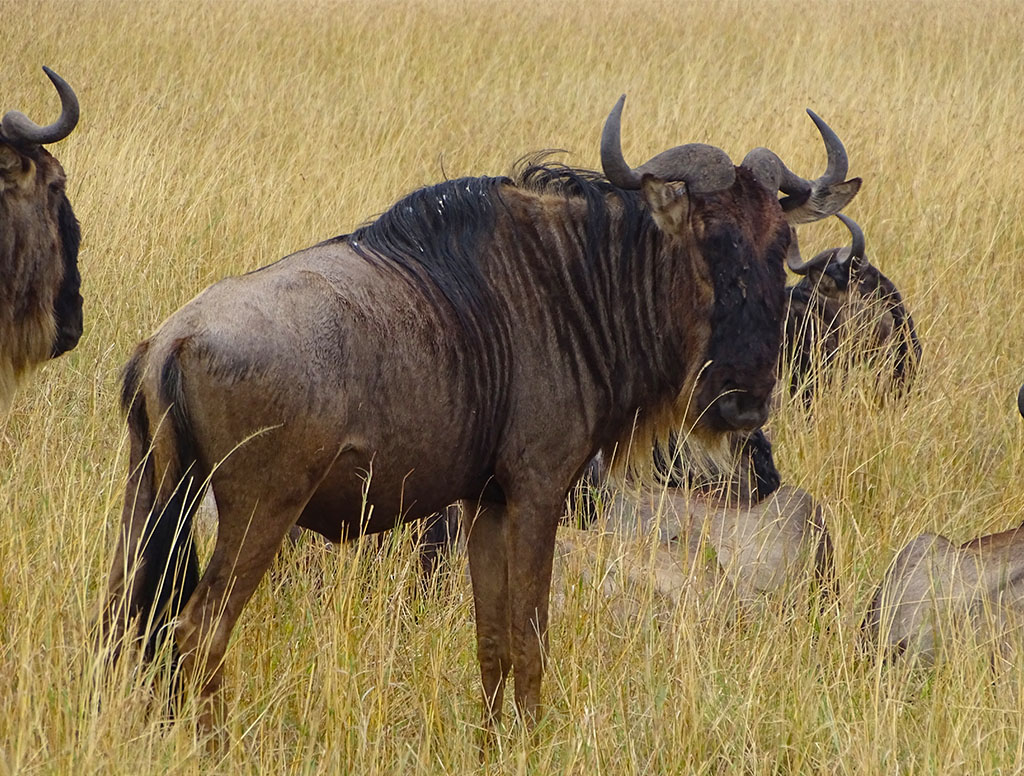
That afternoon we saw two large lion prides, zebras, elephants, baboons, rhinos, hyenas, giraffes, wildebeest, and many deer varieties. Over the next several days, we watched a cheetah devouring its kill, a lioness teaching her cubs to hunt, hippos rolling around a river beach, the wildebeest migrating, and so much more. The animals were just everywhere! (All except that dang leopard.) We also saw lots of cute baby animals. It was really interesting to see how the animals interacted. A predator could certainly scatter a herd, but the grass eaters were all lumped together. Deer, giraffes, zebras, wildebeest, water buffalo… and they were all grazing together. Even the wildebeest migration across the Mara River included a few zebras and deer!

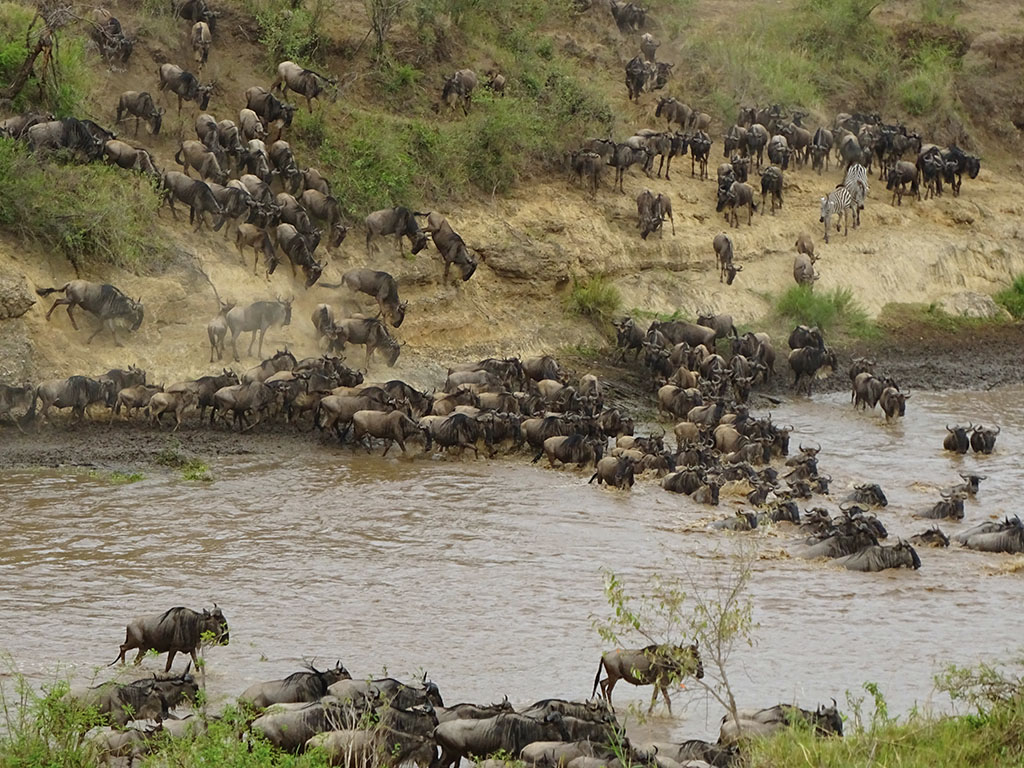
We were very lucky to catch a wildebeest migration event, and all credit goes to our driver guide who quickly got us to the correct place just as a herd was positioning themselves to cross the Mara River. All it takes is one wildebeest to make the leap, and then 1,000s more will follow. It was spectacular. They picked a good crossing point on this occasion. All seemed to make it across except for one baby that was too scared to jump and got left behind. 😦

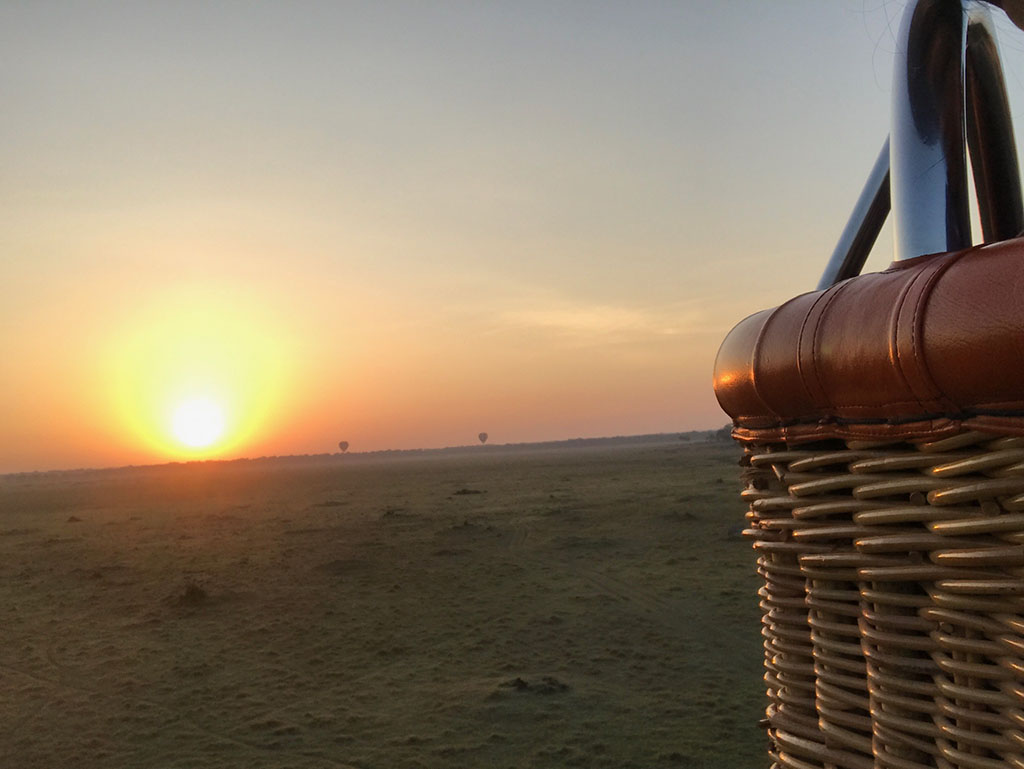
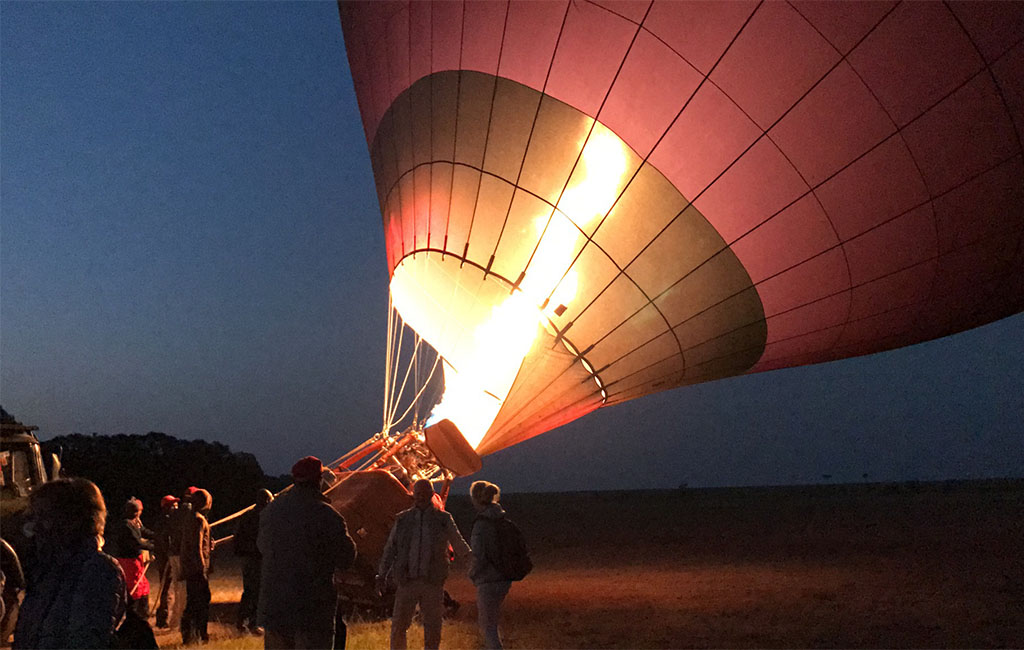
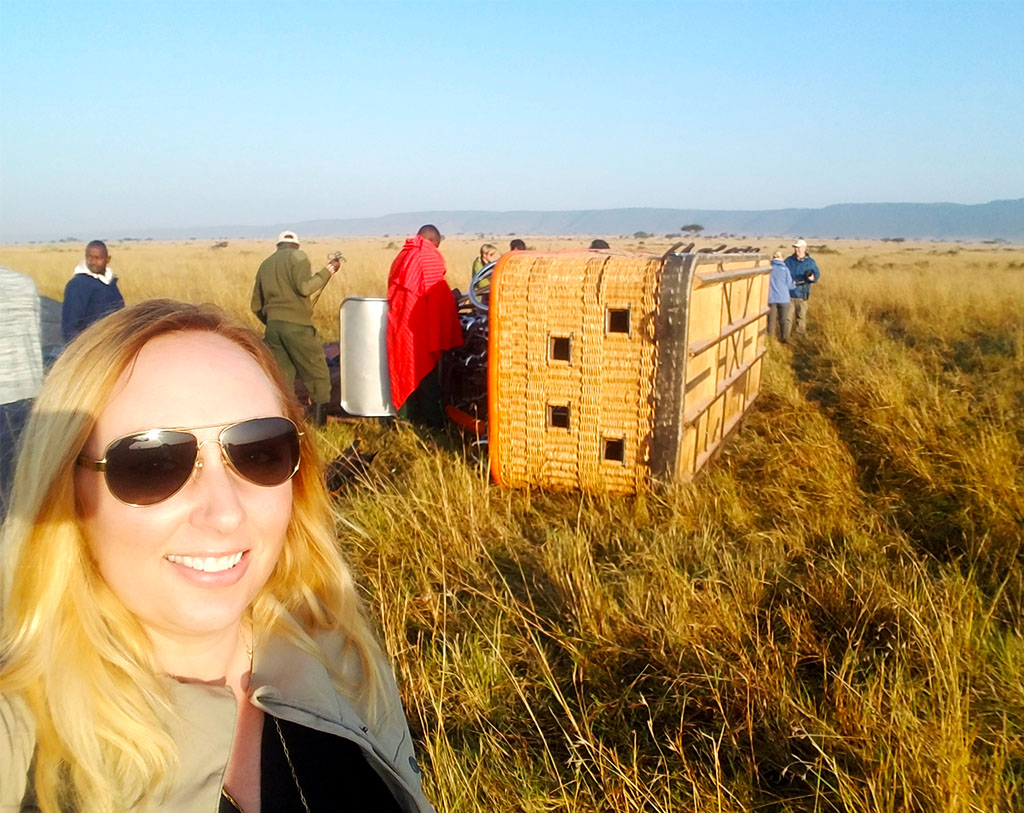
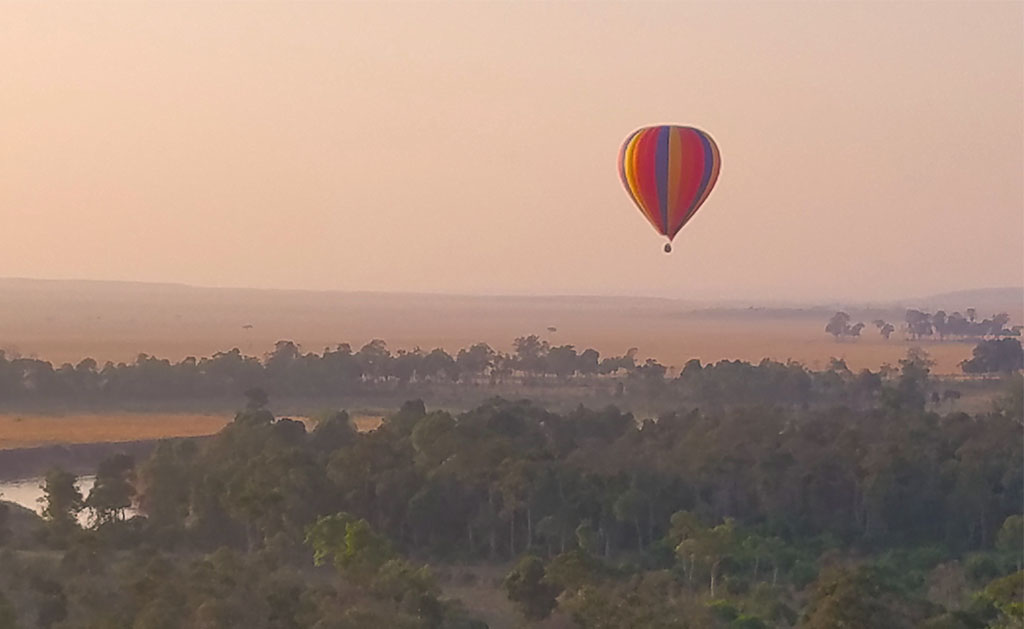
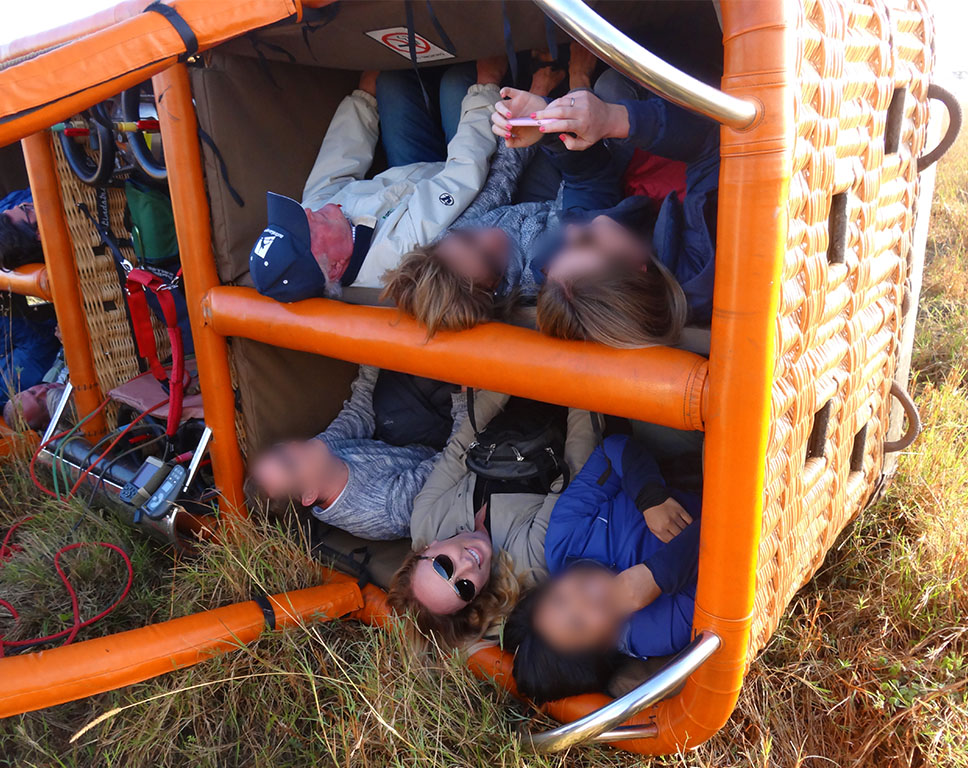
On our third morning, we took a hot air balloon ride. It was a very early morning, and we watched a gorgeous sunrise over the Maasai Mara. Fun fact – did you know that hot air balloon baskets may tip over upon landing?! I learned this that day. I got to crawl out of the basket on my hands and knees! They then made us a champagne breakfast. We were very spoiled! Later that afternoon we visited a Maasai village. A tour, dance exhibition, and shopping were all on the schedule. It’s worth noting that the money from our purchases of their handmade items directly supports the village and the local school.

Nairobi – We returned to Nairobi. We had a full day in Nairobi, and we used it well. We hired a driver and went to the Nairobi National Museum. For those who are fans of archeology, there are many impressive finds in this museum. It also has an amazing gift shop near the entrance. If you don’t like to haggle or bargain, the shop has set prices on the same souvenirs you’ll find elsewhere.
We then moved on to the Maasai market. It changes locations throughout the week, but any hired driver should know where it is. It’s fun but overwhelming. I’d like to provide a few helpful tips just in case you ever find yourself at this market. Determine in advance how much you want to spend and only bring that amount in cash. As you enter the site, someone will try to ‘host’ you. They will offer to walk you around and make a pile of items that you ‘might’ want to buy. They will then help you negotiate for the full pile of stuff. They are friendly but are obviously getting a commission and can be a little pushy. Please know that you can walk around by yourself and haggle with the sellers directly. And when you are done, just tell anyone who tries to talk to you that you have no more money. Once my money was gone, they quickly moved on to someone else! It was a fun environment, but it can be a little intense.
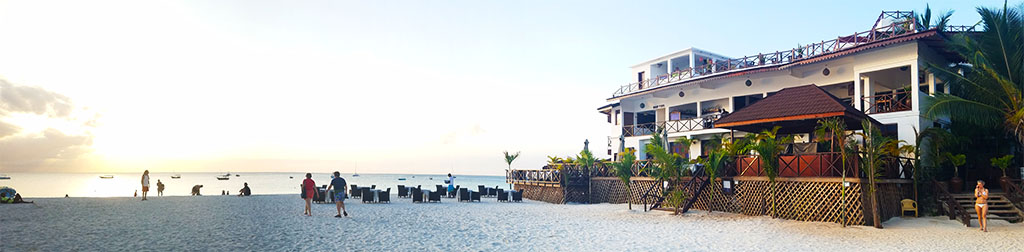
Zanzibar – And on to Zanzibar, the final leg of our trip. The flight from Nairobi was approximately 3 hours. Welcome! You are now in Tanzania. The first thing you will notice is that the people actually say ‘Hakuna Matata’ all the time. It is the go-to greeting. (The Disney song was stuck in my head the whole time we were there!) Our hotel had sent a car for us, so we met our driver and relaxed for the 1.5-hour drive to our hotel.
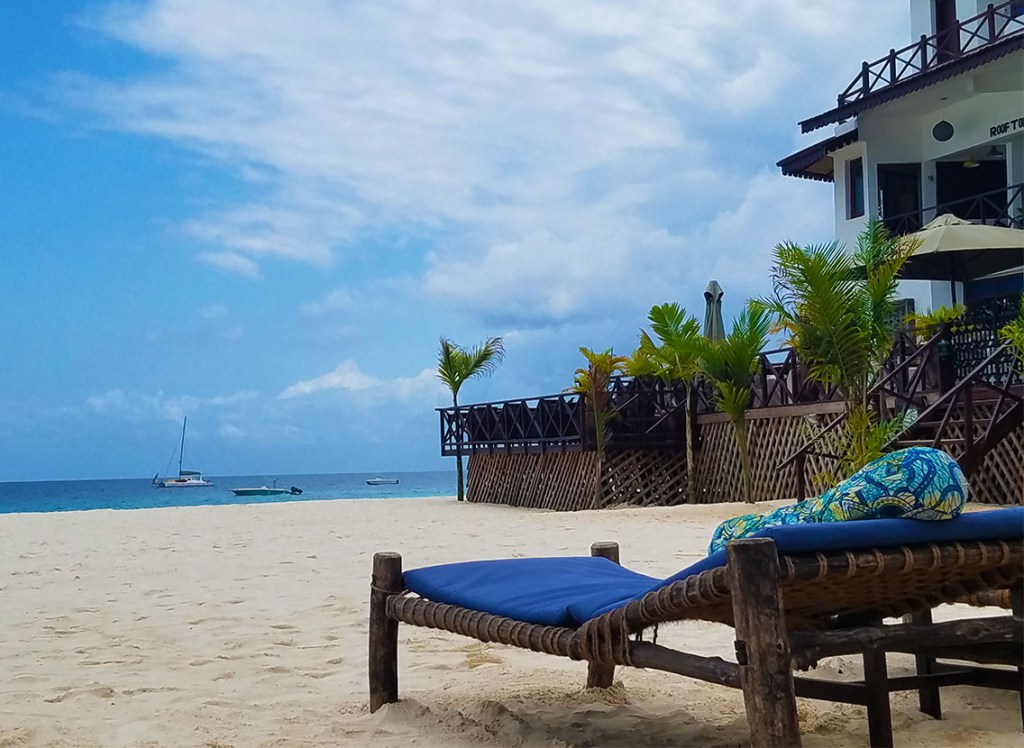
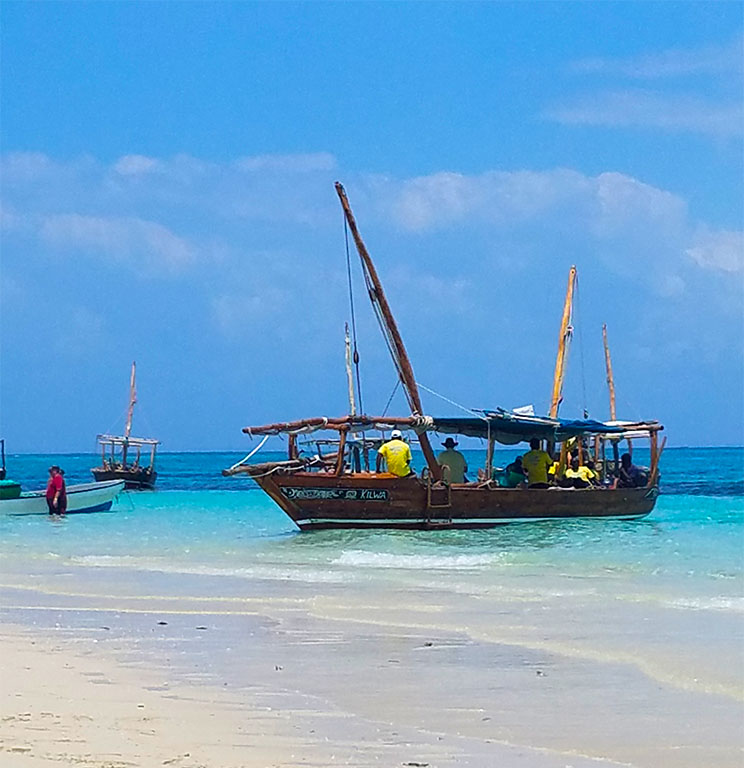
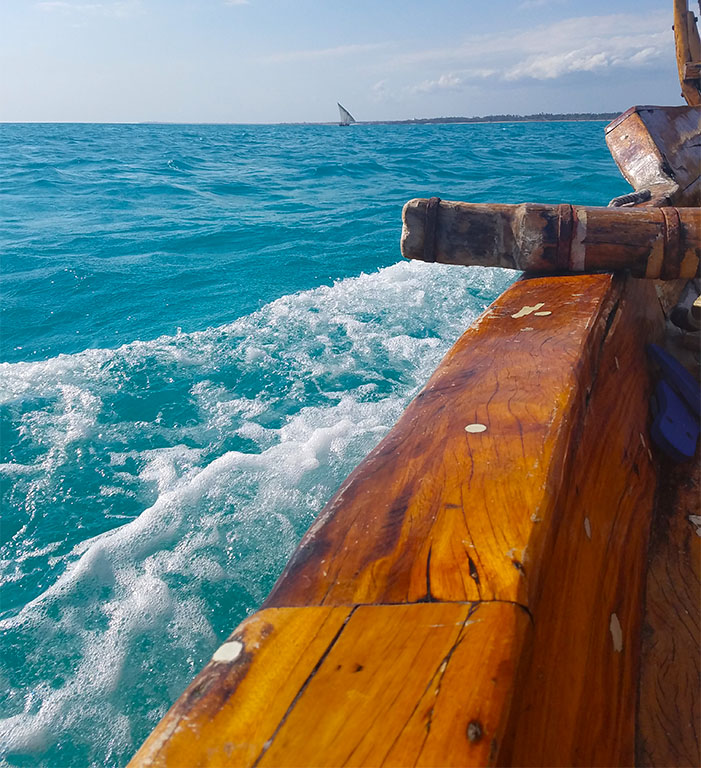
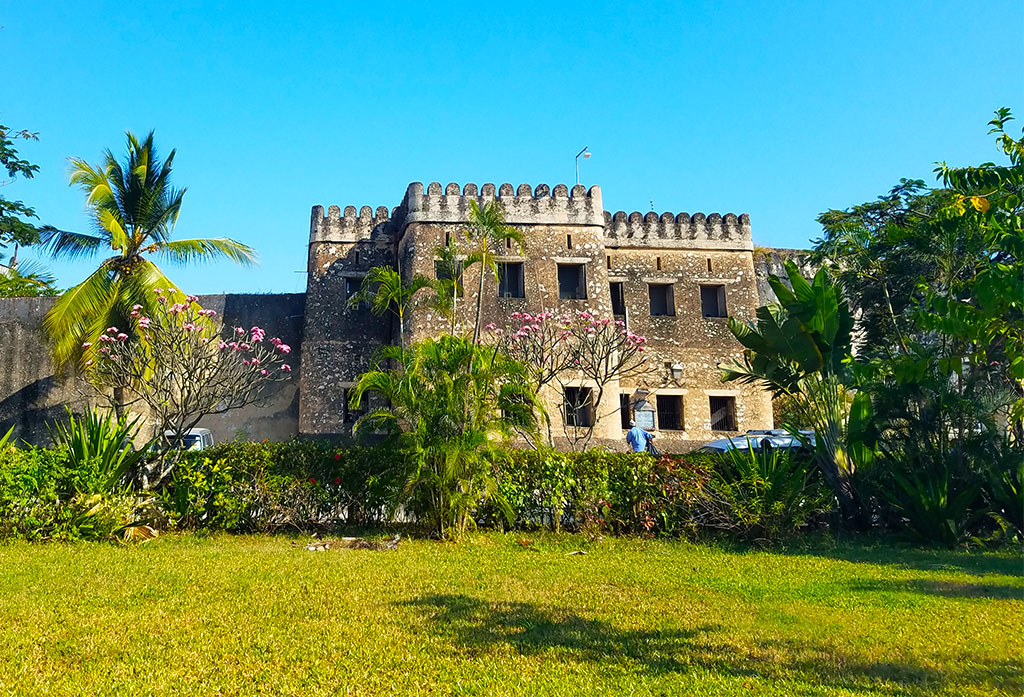
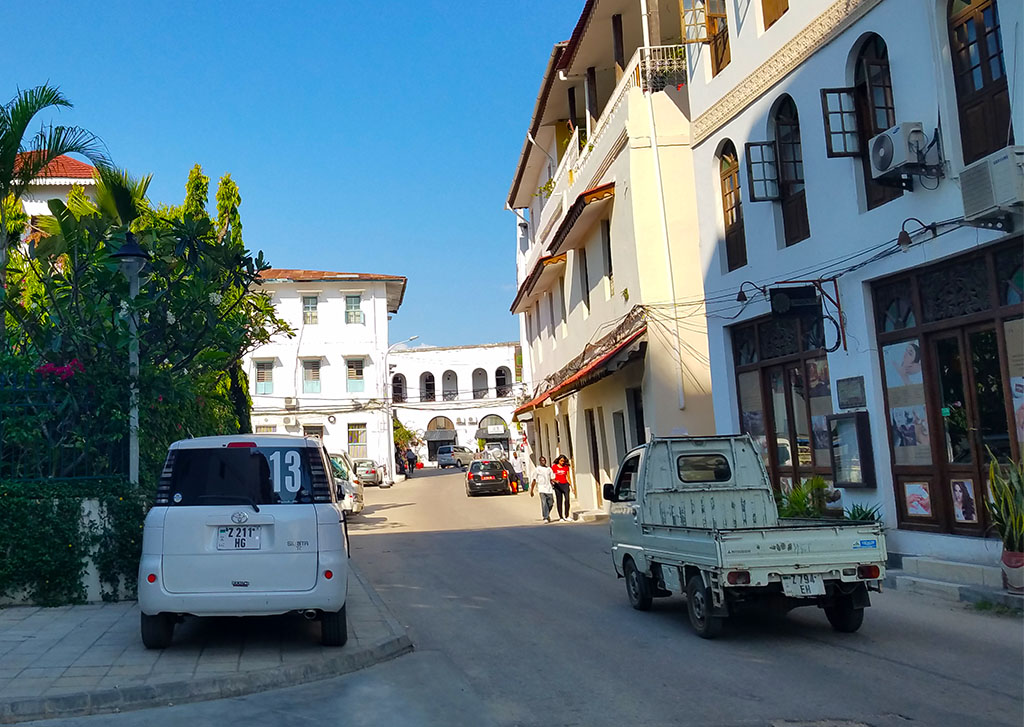
Let’s talk about the geography of Zanzibar for a moment. The airport and many of the activities are in the southern part of the island. The northern part has amazing beaches. And the island is bigger than you think. We booked a hotel in the village of Nungwi which is in the north. It was amazingly beautiful, but we had a long drive to get to activities. To limit the driving, we chose to relax on our beach every other day and do activities on the other days. In terms of activities, we went dhow sailing one day. Best day ever! We also went to Stone Town. It’s very walkable and has cute streets and lots of cultural sites worth seeing. Great options for food too.
Highlights
When you hear rapid Swahili over the CB radio – The driver guides work very hard to try to show you all the animals, but nothing is guaranteed. I mean, come on, we are talking about wild animals. The driver guides communicate in Swahili all day, sharing information about where they are in the park and what animals they are seeing. Basically, they share a lot of real time information. Every so often we heard rapid, loud, excited Swahili over the CB radio. Our driver guide would turn and say, “animal x has been spotted, let’s go!” The louder and more excited the Swahili sounded, the more rare or special the animal sighting. For example, a cheetah that had just successfully hunted her lunch and was now enjoying the meal? This warranted a lot of loud Swahili, followed by a fast, bouncy drive to the sight. A lion sighting in Tsavo, which is rare in that park, turned into a high-speed caravan toward the lion’s location. But the loudest, most excited Swahili that we heard? It was a huge herd of wildebeest. They were just about to cross the river. Swahili exploded out of the CB radio. We jetted over the location and got a prime spot. This is all to say that when on safari, if you hear excited Swahili over the radio, tighten your seatbelt and hold on to your camera. It’s going to be a fast and bumpy ride. But once you reach your destination, you’ll see something amazing.
Swahili and the Lion King – Did you know that I speak a little Swahili? Actually, I’ll bet you do too. Hakuna Matata. Mufasa. Simba. See, you know some Swahili. The Lion King taught us all just a little Swahili. I did learn a few non-Lion King expressions, like jambo (hello), asante (thank you), and tafadhali (please), but my best Swahili came from the Lion King though.
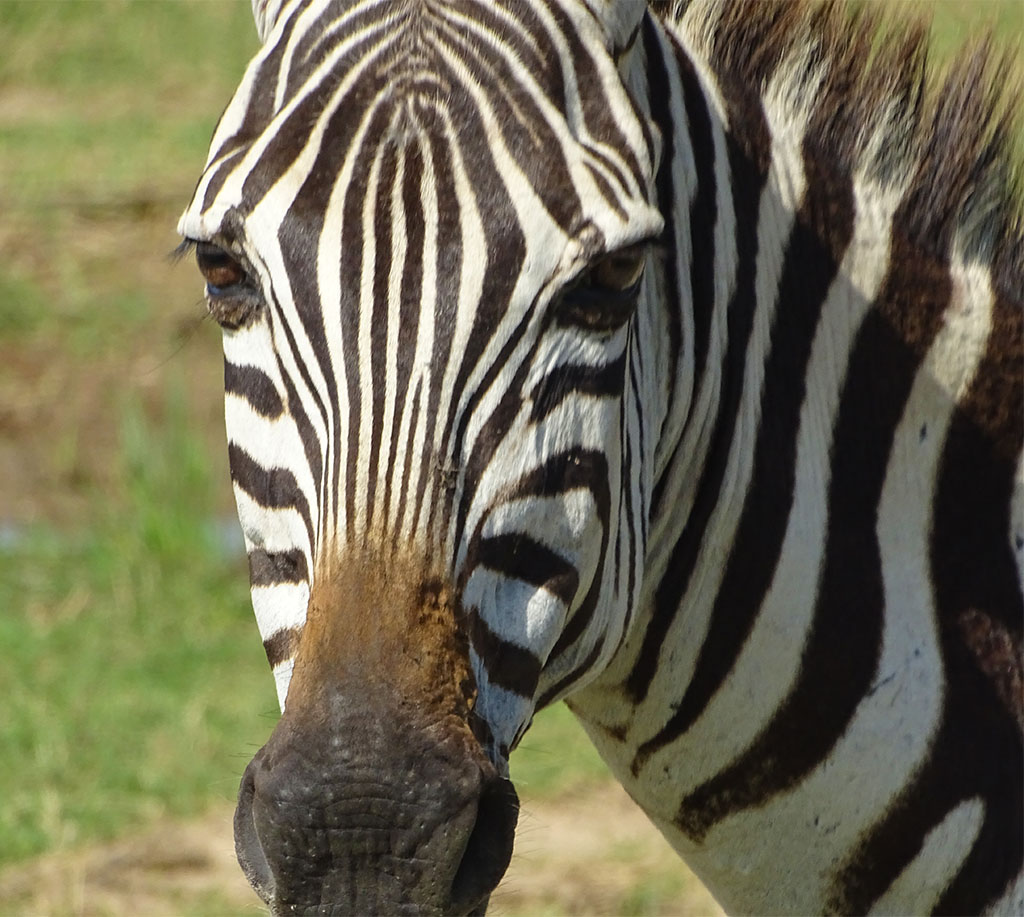
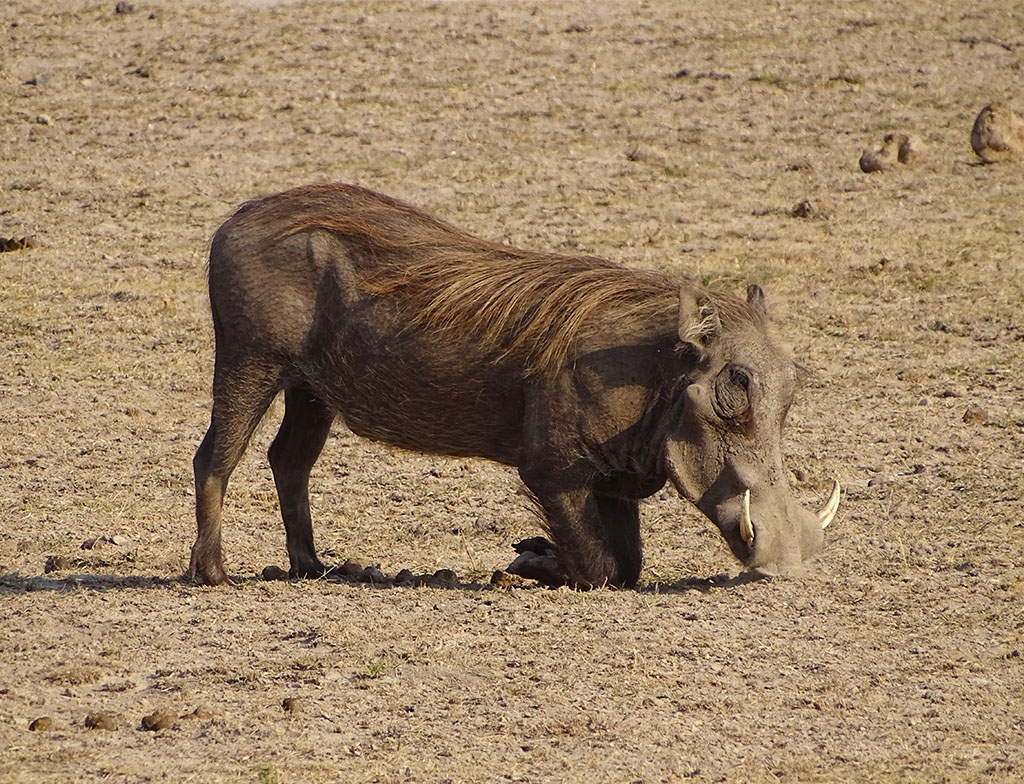
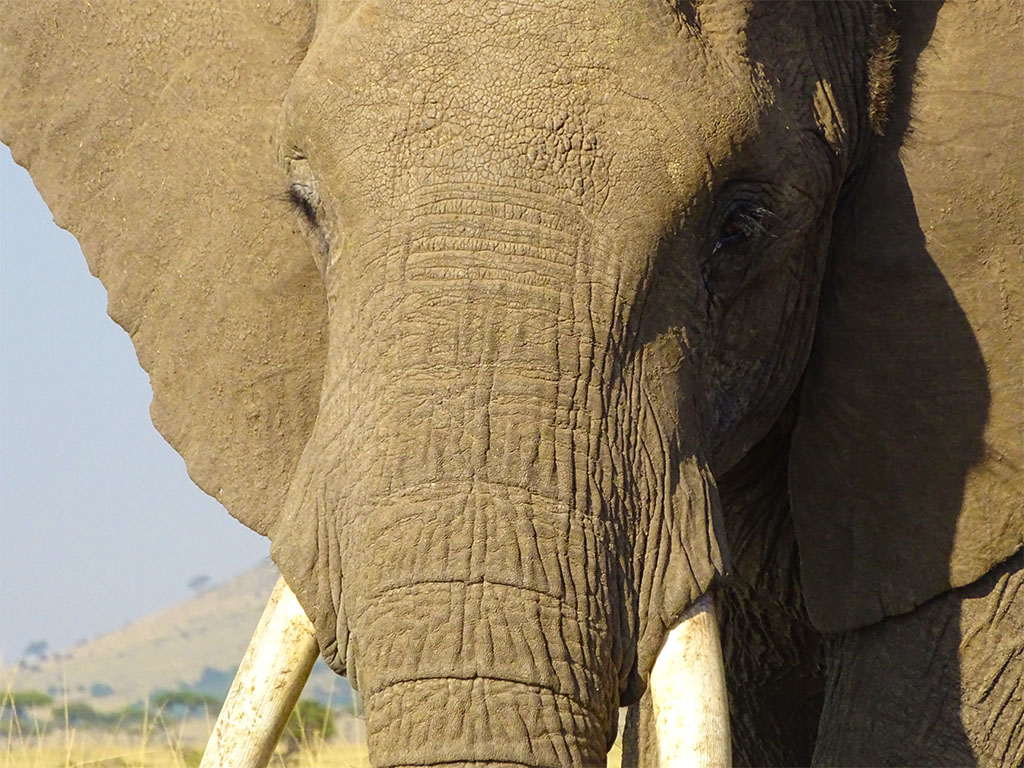
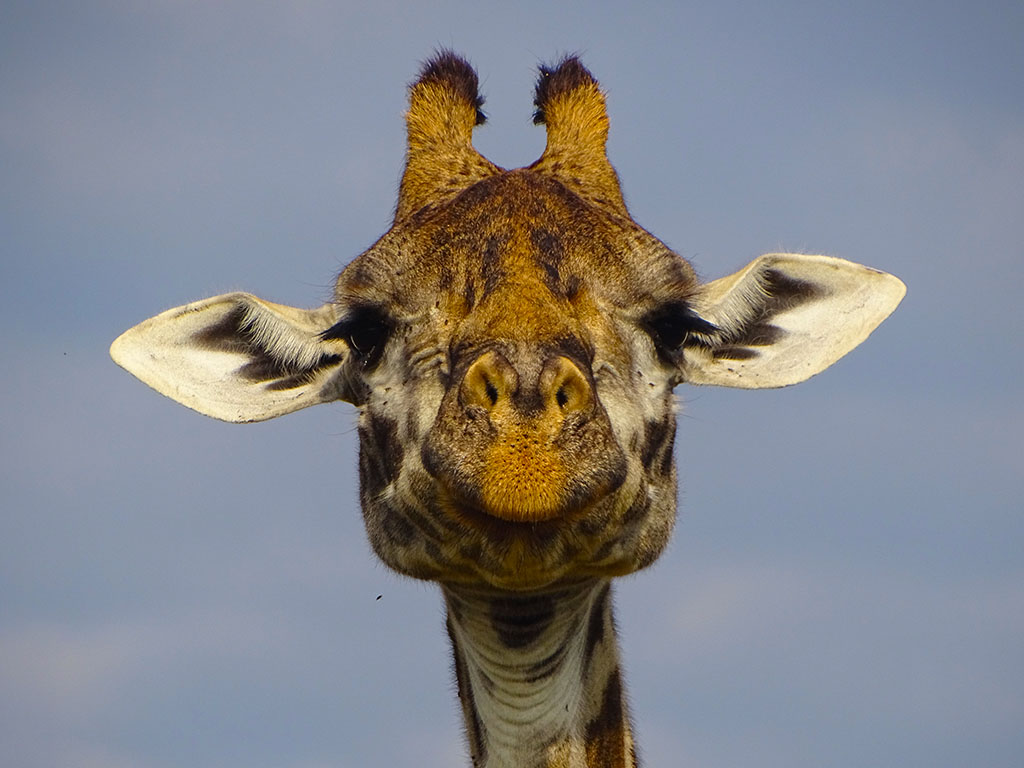
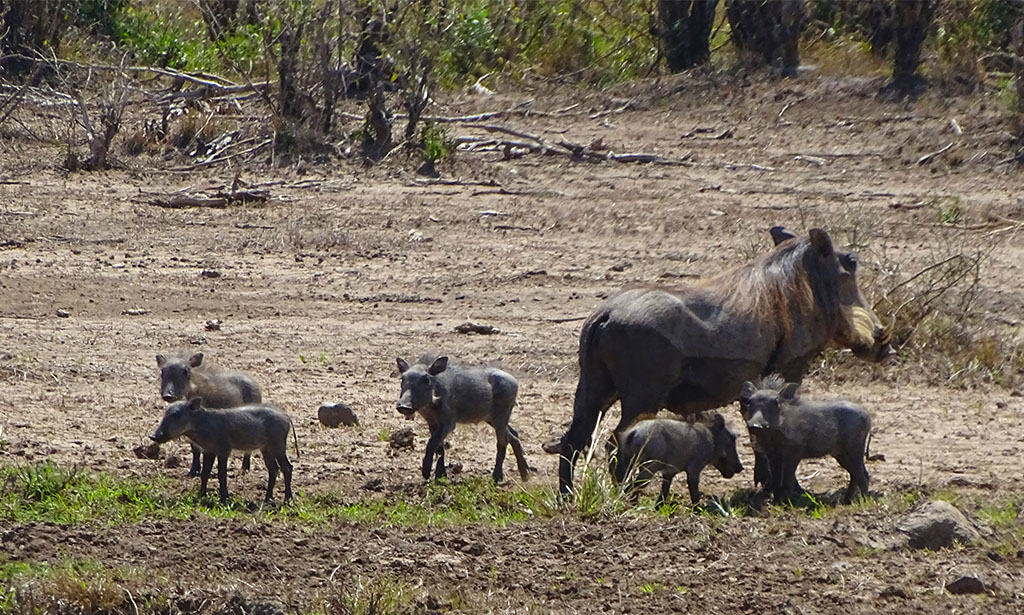
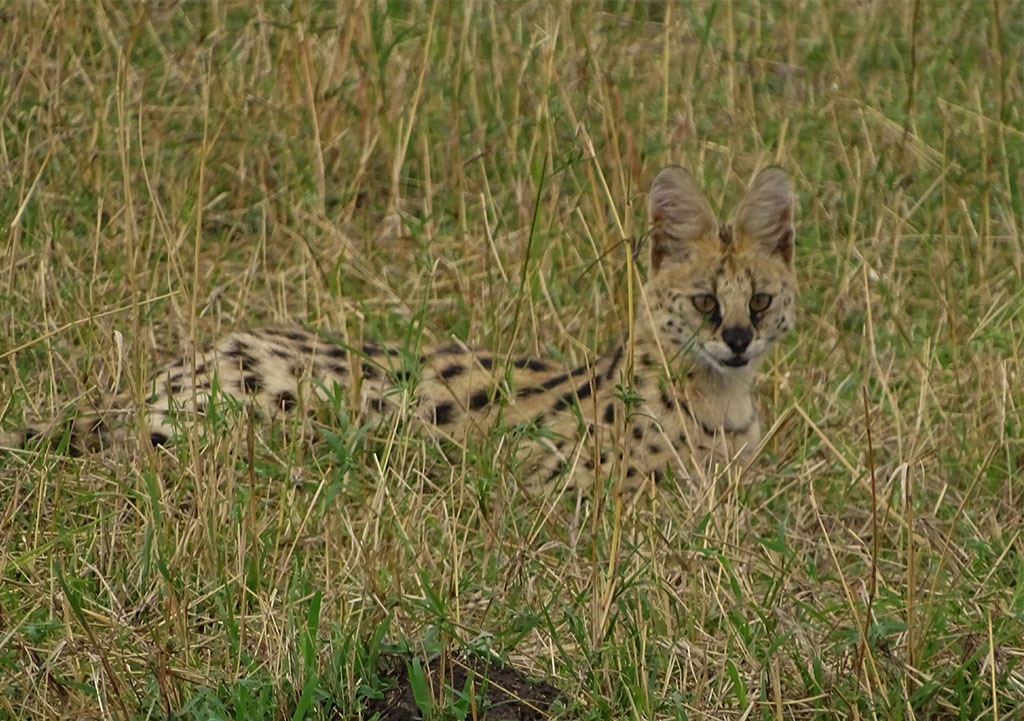
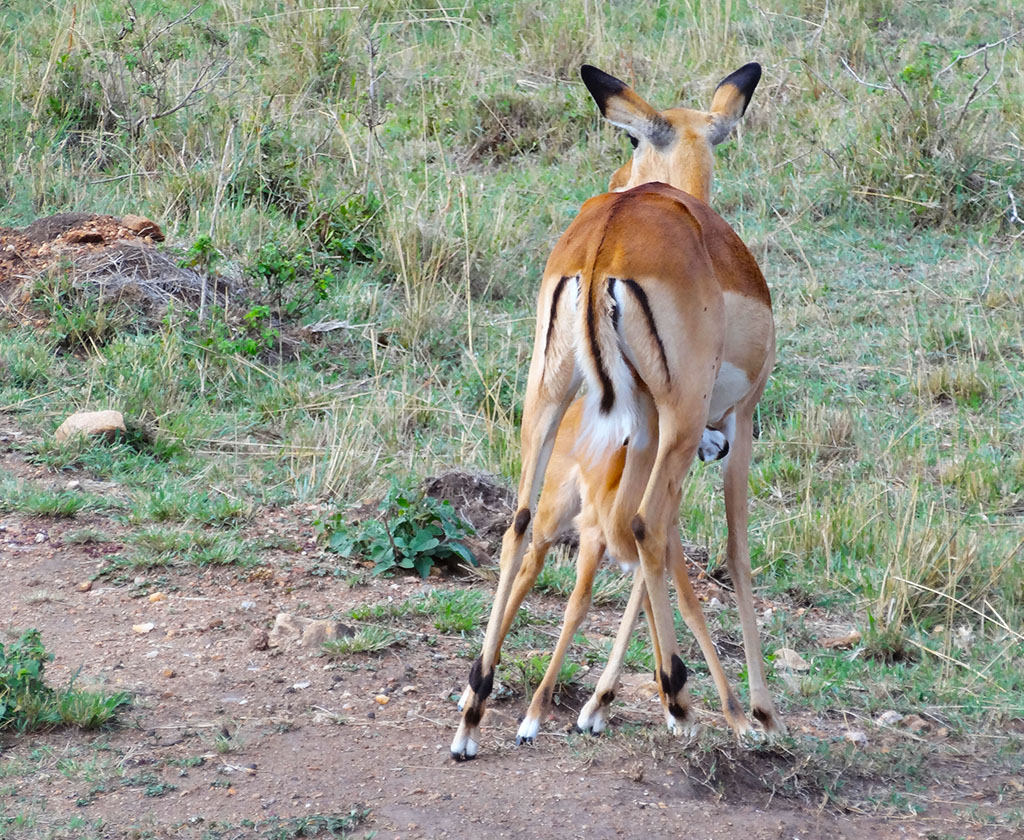
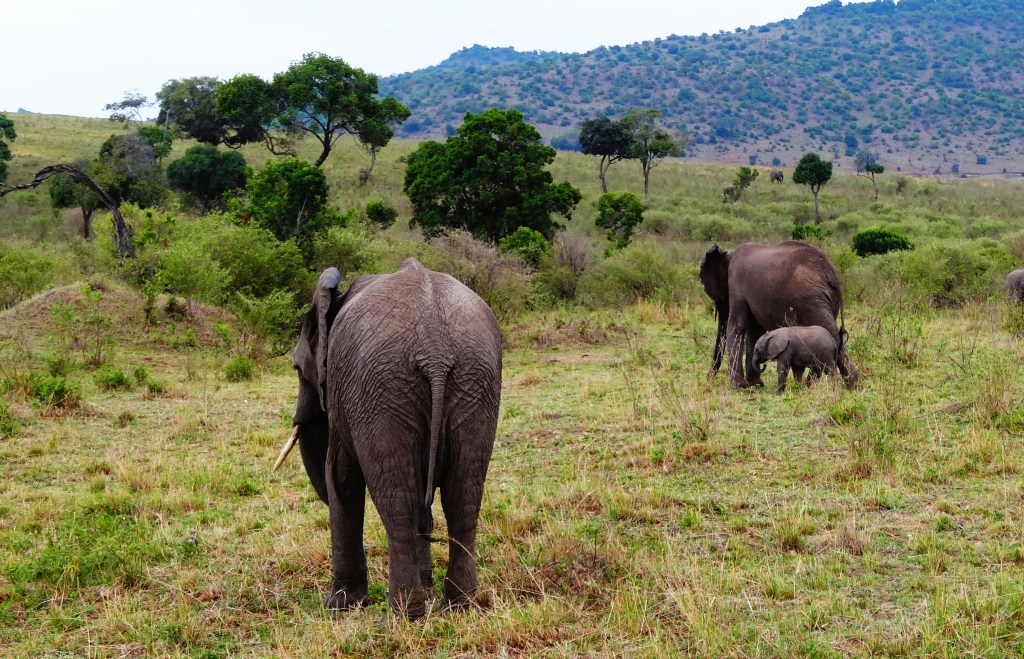
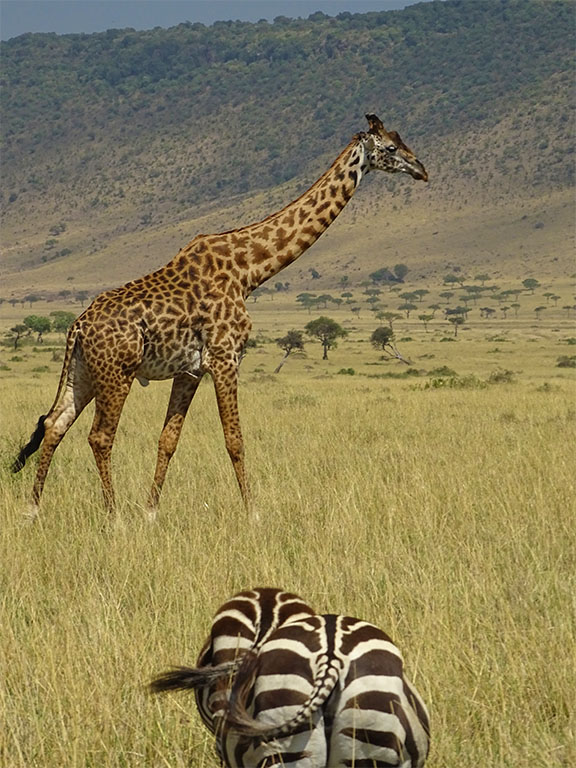
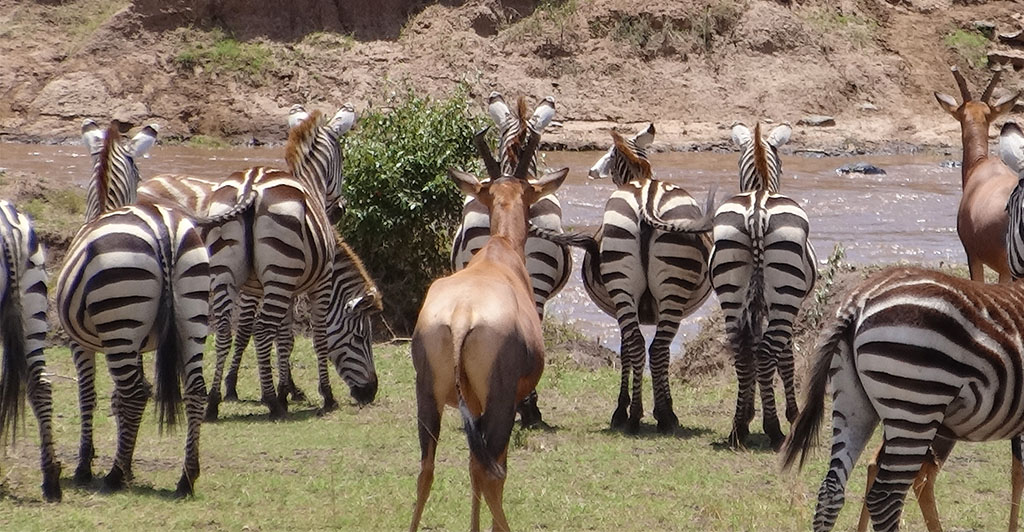
The butts of Africa – As we took our safari drives, my friend and I started joking about how we should make a coffee table book called the Butts of Africa. This is because the animals almost always turned away from us. They didn’t run away, they just turned away. For every picture I have with the face of an animal, I probably have 3 photos of its backside. And if that animal didn’t turn away, another animal would photobomb with, yes, you guessed it, a backside view. This experience was not unique to us. I have talked to others who say the same thing. I won’t try to sell you a coffee table book, but I will share a few photos.
Travel Tips
Tips! – My first travel tip is about tips. Generally speaking, Kenyan safaris are all-inclusive except for extras such as alcohol and tips. In most of the places we stayed, there was a centralized tip box and staff was meant to share whatever you gave. However, there were also a few people that needed to be singled out, such as the driver guides. Lastly, be sure to give tips in the local currency! We came across a few guides who were desperate to exchange small amounts of dollars and euros into local currency.
How to pack– You will be sitting in a vehicle all day, and all you need is comfort. Just pack light and include comfortable, light weight, versatile clothing options. During our time on safari, it was hot at times, it rained one afternoon, and it was cool another day. Light-weight clothing with layers is key. I didn’t find that a hat was useful, but that may be because our safari vehicle had a roof. And, if you need to take a tiny plane like we did, they really do weigh your luggage and charge you excess fees. So, what should you bring? Good sneakers or light-weight hiking boots, mosquito repellant, and wet wipes for the safari bathroom breaks.
Cameras – I will not pretend to be an expert on cameras, so I will keep this simple. Bring a camera that has great zoom. Though you are sometimes close to the action, you won’t always be. Be sure that you can zoom in when needed.
Immunizations – I did get a few immunizations before this trip, specifically Yellow Fever and Typhoid. I also got malaria pills. I did this all at a travel clinic. It wasn’t cheap, but it was easy. I would also note that you must show your vaccination record, commonly called a ‘yellow card,’ when entering Tanzania (Zanzibar.) They are looking for verification that you got the Yellow Fever vaccine, and this is a requirement for admission. I have heard of varied experiences on this, but when we flew into Zanzibar, we did have to show our yellow cards before going through immigration and customs. Those who didn’t have the yellow card were sent to some office. My best guess is that they had to pay a fine before being admitted, but that’s just a guess.

