At a Glance
From Lisbon to Porto with wine – This was a two-week trip through Portugal during February with two of my ‘bestest’ friends. As it was winter, we opted to skip the beachy south and travel north from Lisbon to Porto. We rented a car in Lisbon and dropped it off in Porto. It was great to have a car as we got to see places we would never otherwise have been able to get to. It rained a few of the days, but overall the weather was sunny and just a bit cool. As it was off season, we were able to enjoy everything without crowds.
Itinerary
Day 1 – Arrival in Lisbon
Days 2/3 – Lisbon
Days 4/5/6 – Obidos with day trip to Peniche
Days 7/8 – Coimbra
Days 9 – Aveiro
Days 10/11 – Murca
Day 12 – Sabrosa
Days 13/14/15 – Porto
Story
Lisbon – We spent one full day exploring Lisbon. We made use of the tram to get around and were able to see a lot of the sights including Belem, Mosteiro dos Santos, Museu Coleccao Berardo, Padrao dos Descombrimentos, Torre de Belem, Elevador de Santa Justa, and, my favorite, Pasteis de Belem. Pasteis offers the famous custard tarts – mouth watering good.
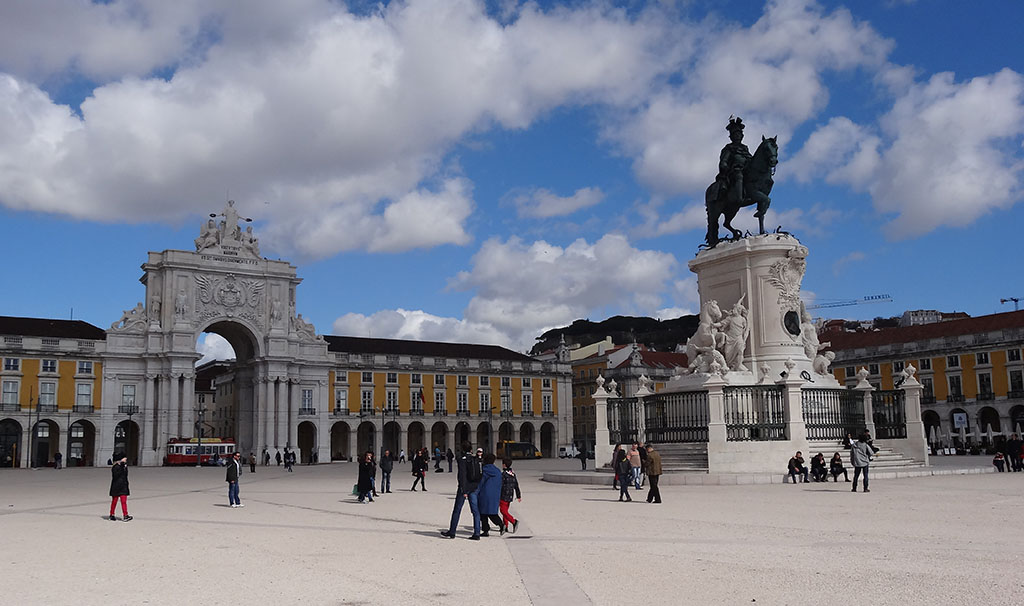
On our second full day, we took the train to Sintra and toured the Palacio de Pena and Castelo dos Mouros. A long lunch in cute Sintra was also a highlight. During the next morning, we had just enough time to see the Praca Dom Pedro IV, Alfama, and Castelo (hill fort with great views) before picking our rental car up and hitting the road.
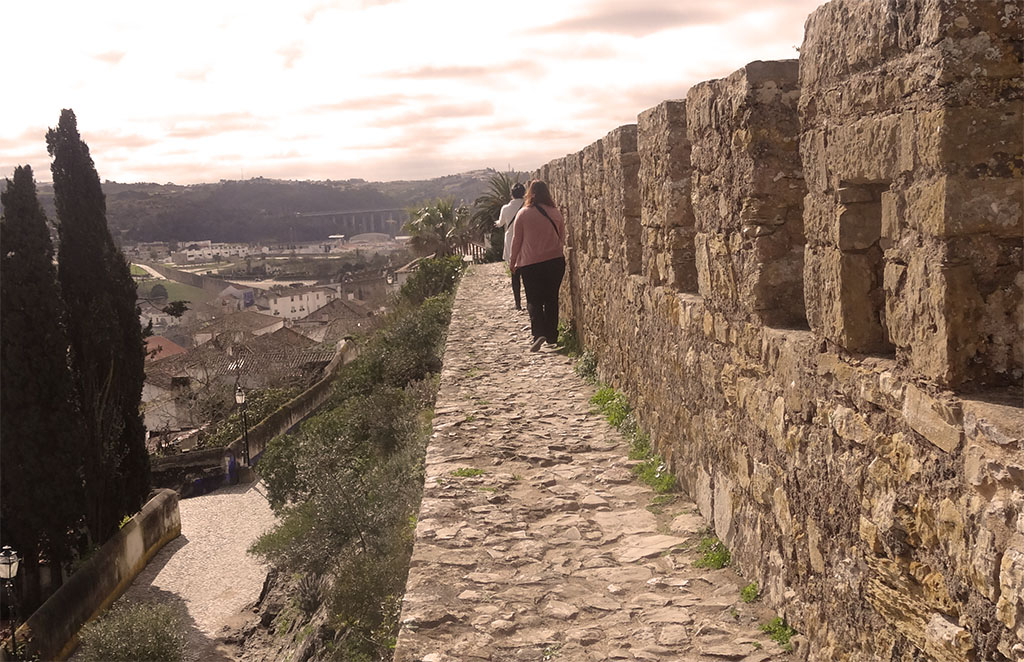
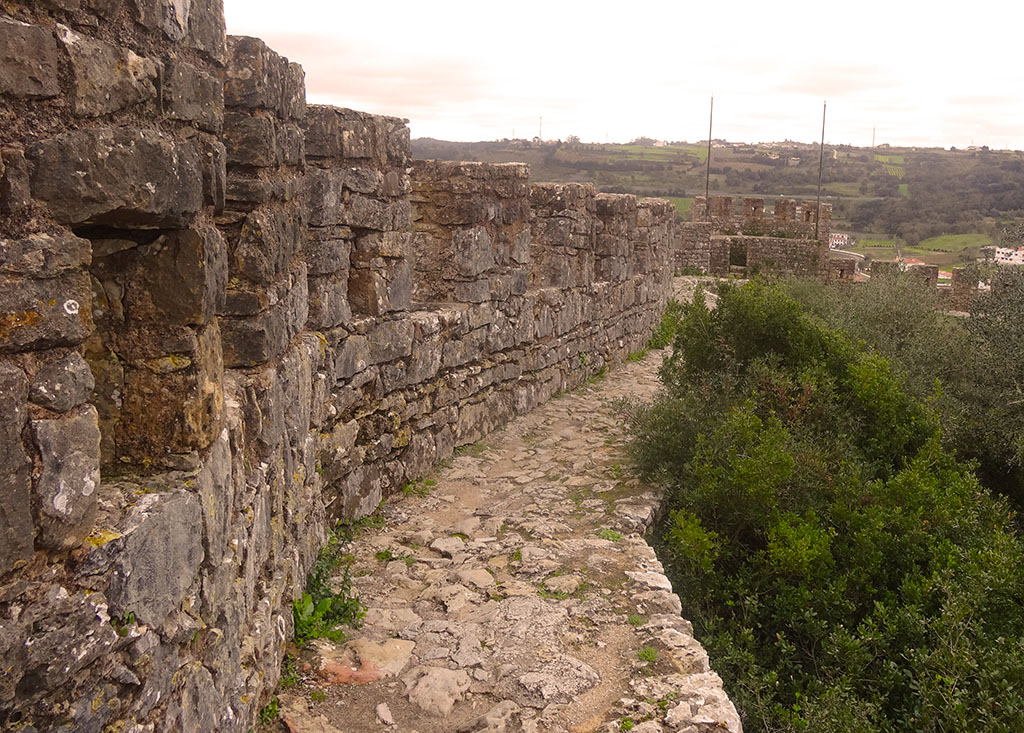
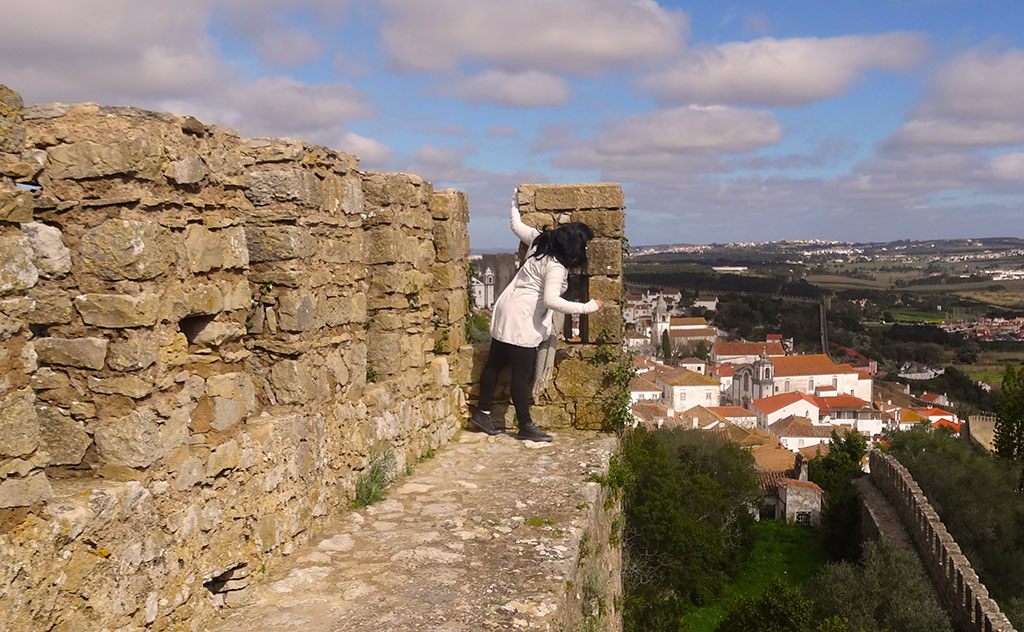
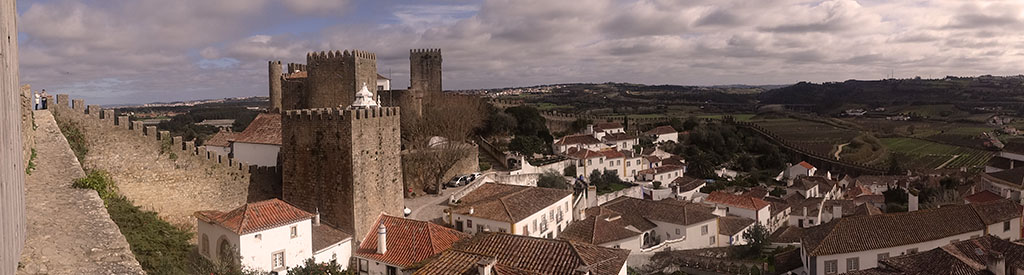
Obidos – I am a sucker for cute medieval towns, and this one was awesome. Complete with stone city walls. Walking the walls was amazing, but not for the faint of heart. There was no safety railing, and the walkway was a bit narrow at certain points. Obidos is full of restaurants and shops and a real castle! One day we explored Obidos (and its wine bars), and the next day we took a day trip to Peniche, a nearby beach side town. It was in Peniche that we had our first taste of Portugal’s famous Vinho Verde wine.
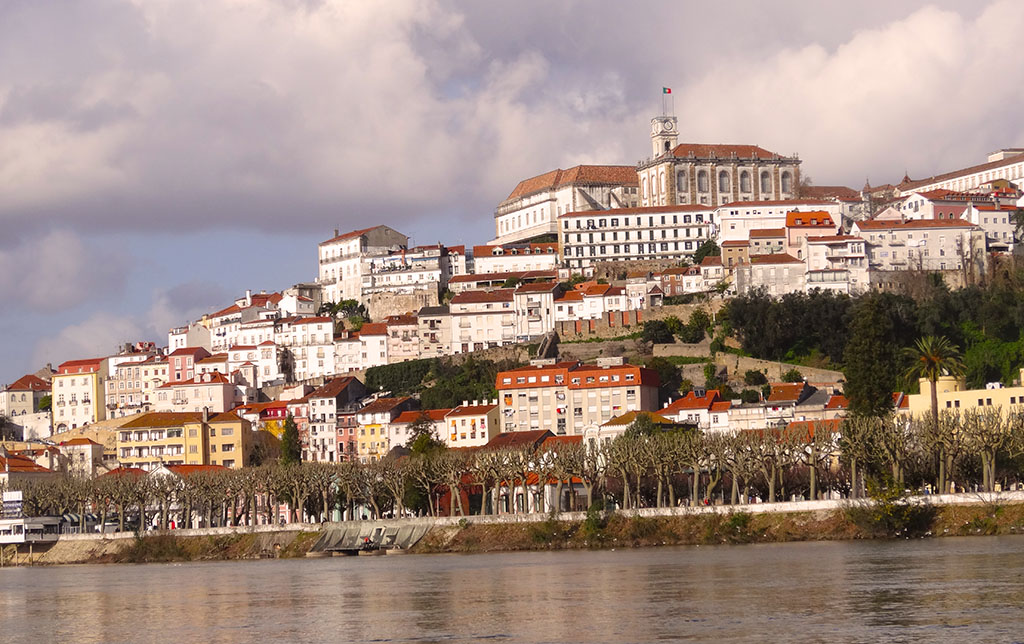
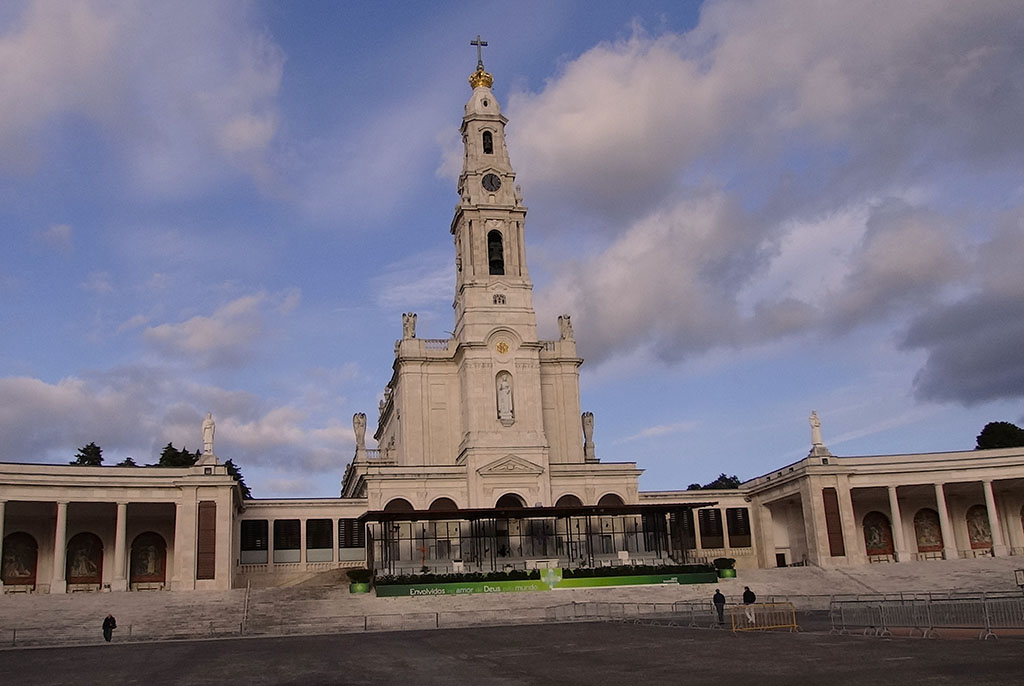
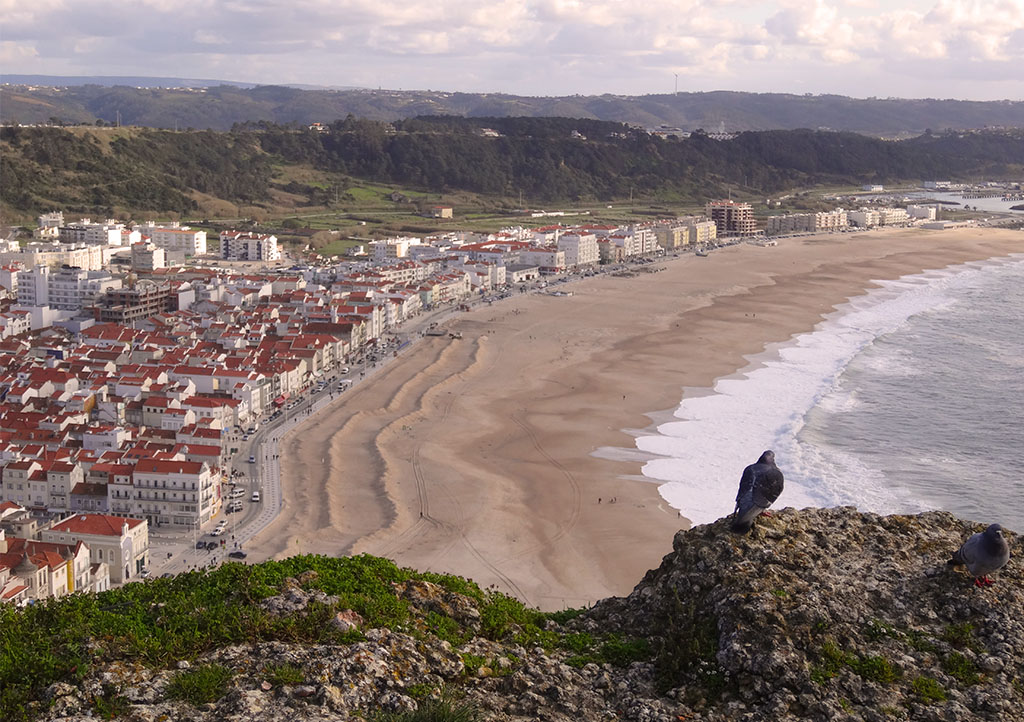
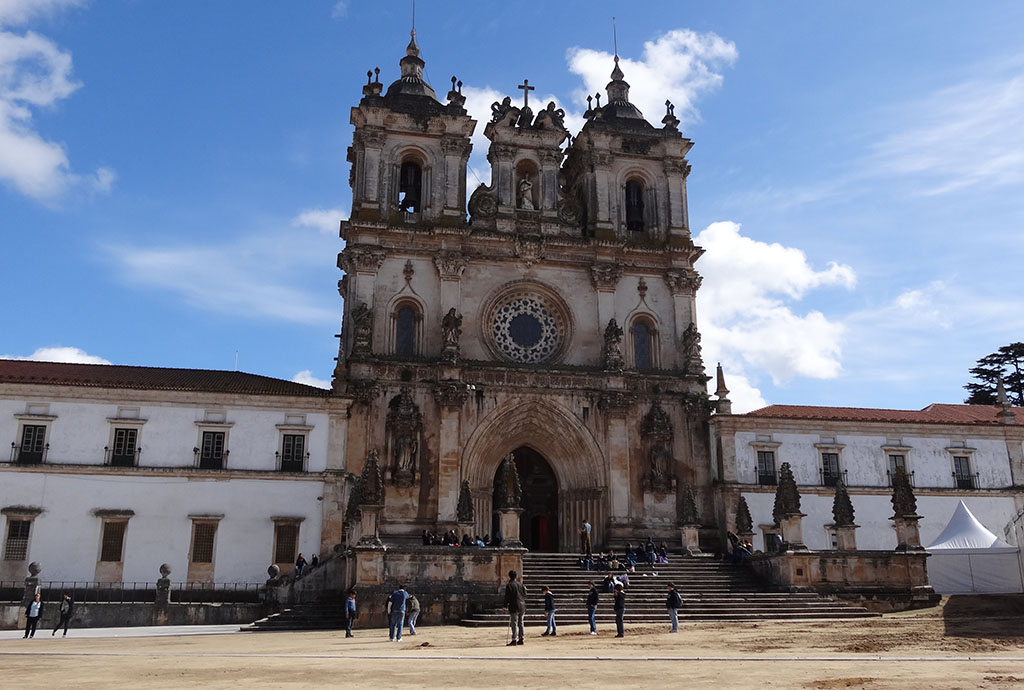
Coimbra – Our next stop was Coimbra, but we had a full day of sightseeing on our way. We first stopped in Alcobaca to see an 800-year-old church. It’s the burial site of Portugal’s own Romeo and Juliet, though the story is a bit more macabre. We then stopped in a beach town called Nazare for lunch. We got lucky as it was a beautiful, sunny day. We then went to Fatima, the last stop before arriving in Coimbra. Fatima is a holy site of pilgrimage. Regardless of religious beliefs, Fatima is worth a visit. We then had one full day to explore Coimbra, but the highlight was dinner. Ze Manel Dos Ossos is a very small restaurant with two seatings, no reservations, and a handwritten menu. You get in line early and hope to get in. Thankfully we did!
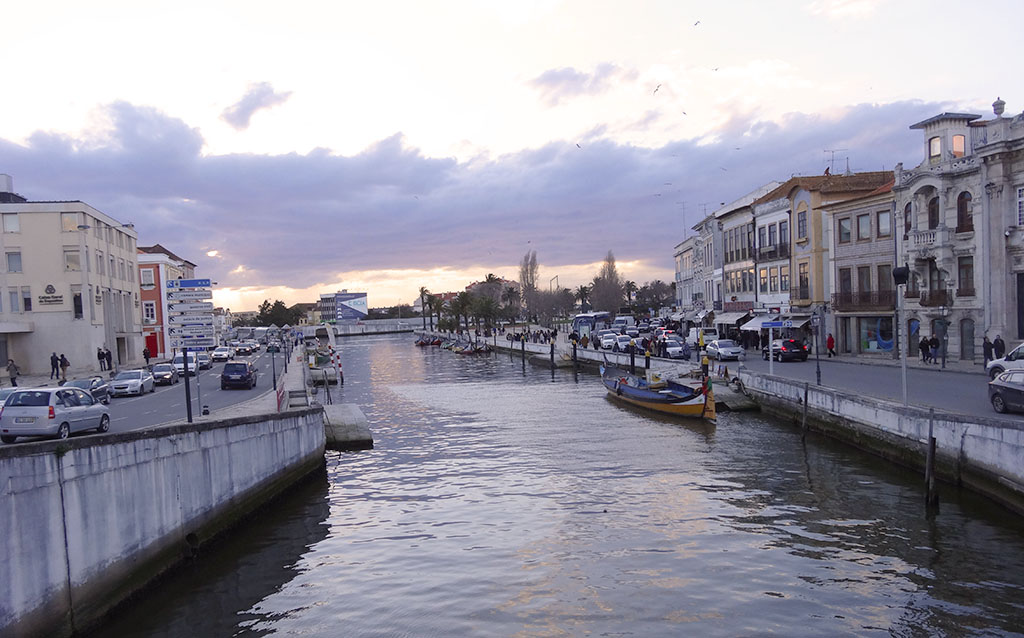
Aveiro – This was really just a convenient place to stop on our way north. It’s called the Venice of Portugal due to its canals and gondolas. It was a good stop, but one day was sufficient.
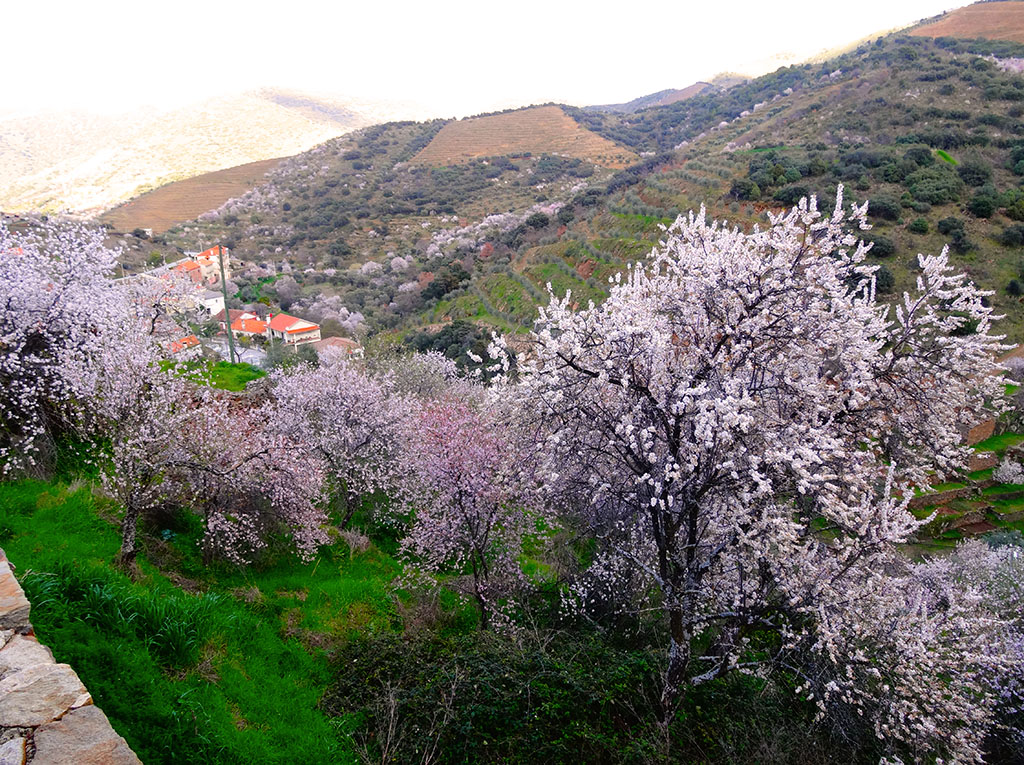
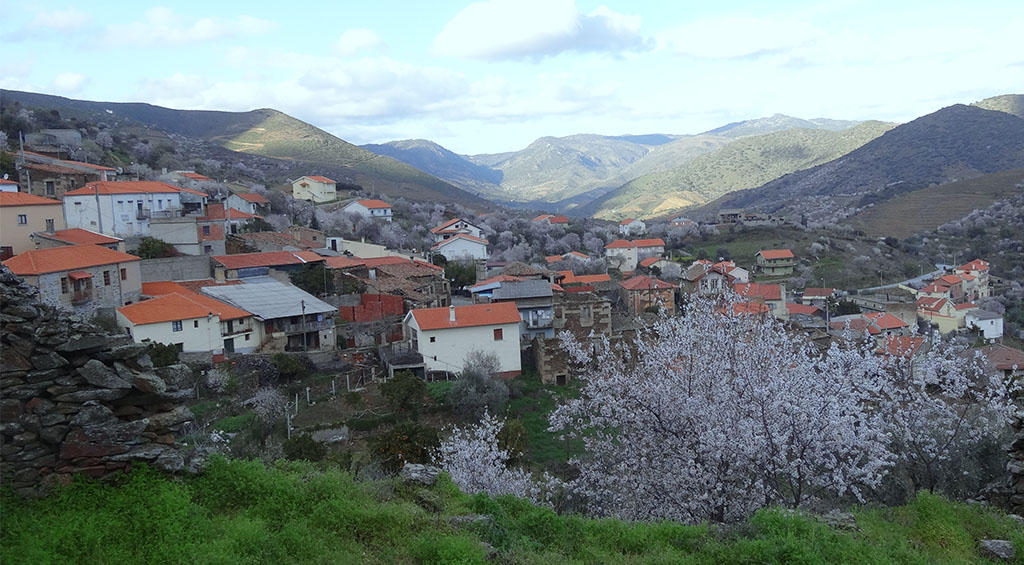
Murca, Douro Valley – I still don’t know how my friend found this place, but it was an absolute delight. (I always think about this village when I hear about the 1 Euro houses in Italy!) We did a wine tour and visited a pre-history museum. I should also note that the almond trees were blossoming all around us. wow. just. wow.
Sabrosa, Douro Valley – We drove a few hours in the general direction of Porto to arrive in Sabrosa. This is the heart of Portugal’s wine country. We stayed at a winery called Quinta Do Portal that has amazing restaurant on site. Yep – this was our wine and food tour of Portugal!
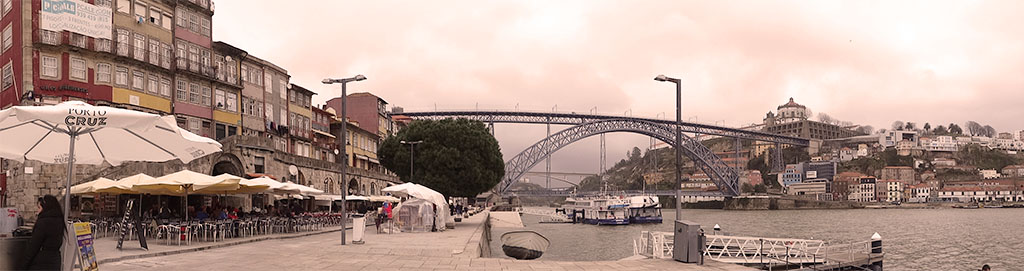
Porto – We had 2 days to enjoy our last destination. Did you know that Porto is all steep hills heading down to the river? It was a gorgeous city that gives your legs a workout. We spent part of our time exploring the riverfront area by bicycle. It was the only flat area in the city and made for a scenic and fun bike ride. In the late afternoon, we went port tasting.
Highlights
Who’s the ‘Pirate’ today? – While in Lisbon, we stayed at a delightful and well-located B&B. During breakfast on our first morning, the owner asked about our plans for the day. We explained that we wanted to see as much of Lisbon as possible. He thought that was great and proceeded to pull out a map of the city. He then asked which of us was going to be the pirate for the day. Umm… Imagine us sitting there, jet lagged, heads tilted to the side in confusion, while trying to understand the question. After a somewhat awkward silence, I volunteered to be the pirate even though I wasn’t sure what I was volunteering for. He then proceeded to explain where we should go, the best sites, and the tram system (even gave us tram tickets). He then handed me the map as I had apparently volunteered to be our guide for the day. I still have no idea if he used the word pirate intentionally or accidentally, if he was actually saying pilot and we misheard, or some other possibility. But regardless, we had an assigned pirate every day for the rest of the trip. The pirate was in charge of planning the day and reading the map. In fact, we still use this terminology when we get together. The pirate is the boss for the day.
Walking Obidos’s Walls – This was one of my favorite activities. To provide a little background, Obidos has a very long and rich history dating back to early Celt tribes. It changed hands many times but was taken back from the Moors by the first King of Portugal in 1148. In 1210, a Portuguese King gifted the town and castle to his Queen. It later became known as the town of the queens as royal consorts and queens supported the town throughout the centuries. For this reason, it’s very intact and well cared for. Perhaps this is why it feels like you are stepping back in history? As we were there in February, the town was very quiet. We had the walls to ourselves on the day we walked them. The walls start and end at the castle and ring the medieval town center back to the castle. It took us maybe 2 hours to make the full loop – though keep in mind we stopped often to take pictures and enjoy the view. As you’ll see from the below photos, the walkway has no handrail, and there is a significant drop in some locations. You need to pay attention and walk carefully. It got so narrow a few times that I side shuffled until it widened back out. This activity is not for everyone, but the views are great.
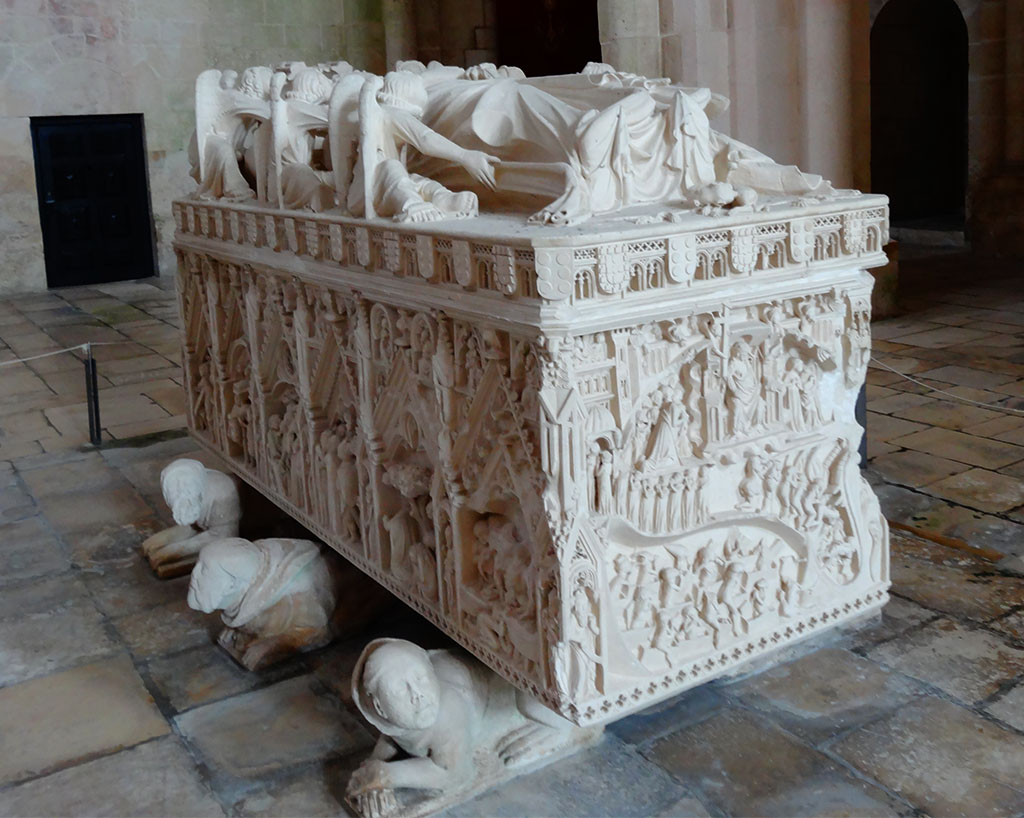
Portugal’s Romeo and Juliet – The church in Alcobaca dates back to 1253 and was originally an abbey dating back to 1153. Within the church are two very ornate sarcophagi from the 14c that belong to Dona Ines de Castro and King Pedro I. Ines was the cousin and lady-in-waiting to Pedro’s betrothed bride Constanza of Spain. Ines accompanied Constanza to Portugal. Ines and Pedro fell in love and secretly married after Constanza’s death. However, Pedro’s father had Ines assassinated as he feared her influence on Pedro. Pedro waited until his father died to seek his revenge. He killed everyone involved in her death. Legend says he even exhumed her body to make the nobles kiss her decaying hand. The effigies carved atop their sarcophagi are situated such that they would be looking at each other if they were able to sit up.
Murca – With our somewhat trusty GPS guiding us, we exited the main highway and started up a long curving road surrounded by beautiful countryside. It took about 20 minutes to arrive in Murca. It was a pretty drive as we were surrounded by blossoming almond trees situated on trestled hills. This was only the beginning of the adventure.
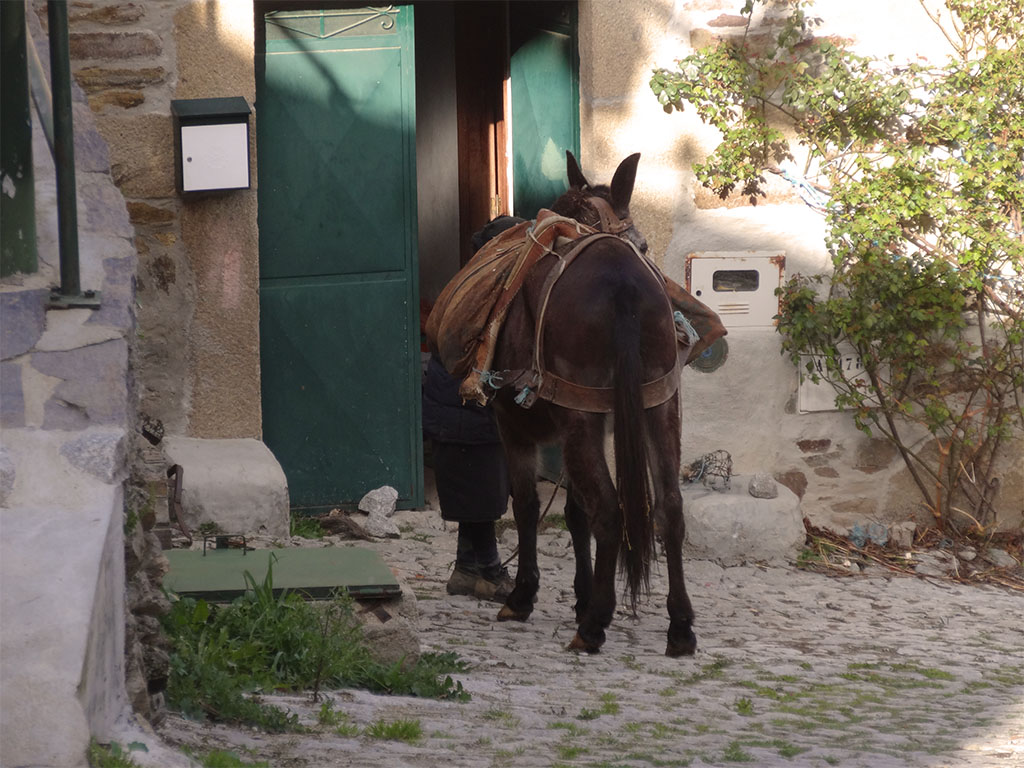
Murca is mostly built from stone and is a throwback to an earlier time. It also looked abandoned. Except for the signs with the name of our B&B, I would have wondered if we were in the right place. We followed the signs off the main road until there were no more signs. The road through the town kept getting narrower and narrower. The ‘sides’ of the road were stone buildings, and we reached a certain point where we had to flip the car mirrors in to fit. Yes, it was starting to feel like a Chevy Chase vacation movie! The road finally dumped us into a small square. It was very small, but I could turn the car around if needed. The square, which was actually triangle shaped, was empty except for a man and his donkey. No, I am not making this up. I told my friend to talk to him and see if we should keep going straight or turn around. She came back and said to keep going. “What exactly did he say?” I asked skeptically. She said that she named the B&B, and he pointed ahead. With fingers crossed, we proceeded into another narrow alley, car mirrors still folded in. Thankfully after a few minutes, the road widened by a few feet and we saw our B&B. Phew! The funniest part was that the narrow road through Murca, surrounded by stone buildings, was a two-way road! I have no idea who has the right of way or how you back out of the way. Luckily, we never encountered another vehicle while entering or exiting the town.
We stayed in the cutest stone cottage for our two nights in Murca. There were no stores and very few people. There were more donkeys than cars. I honestly might have thought it abandoned except that we saw a few people sitting on their patios and peeking out their windows as we explored on foot. It was so unique, so beautiful, and so different than anything I have ever experienced. I’d go back again in a heartbeat.
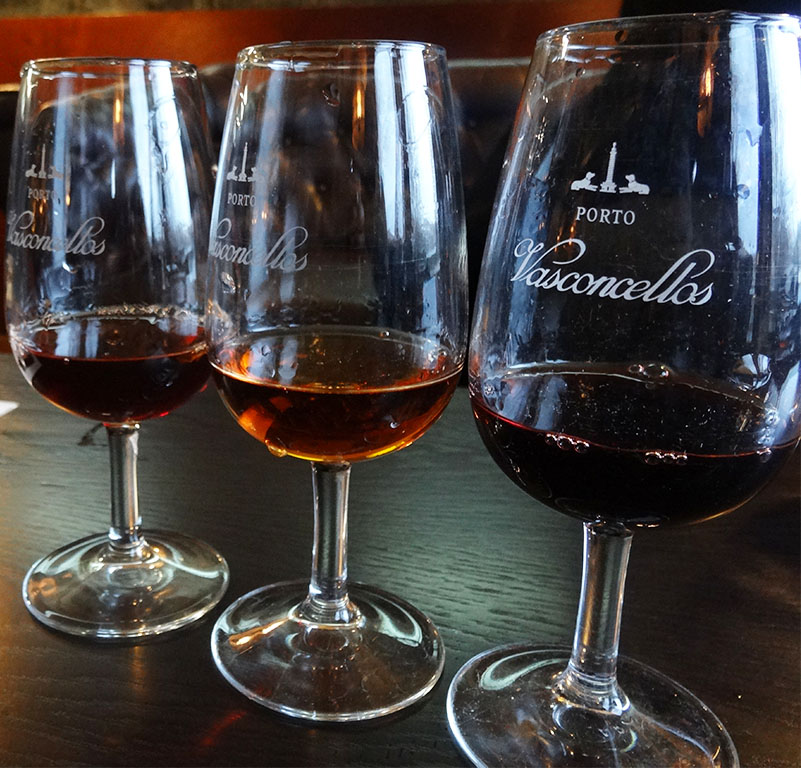
Port 101 and Selfish Port – On our last afternoon in Portugal, we planned to go port tasting. After all, when in Porto, one must drink port. I’m sure that must be a rule. All of the port tasting rooms and tours are located together near the river. You can just walk down the river front and decide where you want to taste. We had originally planned to go to Sandeman. It’s a large operation, and they offered free tours and tastings in various languages. However, we arrived too late, and the only remaining tour was in Spanish. We considered it (as we do speak decent Spanish), but ultimately decided to try our luck somewhere else. This turned out to be a great decision.
We entered into Porto Vasconellos, and it was very quiet compared to the other locations. There was a fee, but it would be waived if you made a purchase. An English-speaking guide was ready to take my friends and I on a personal tour and tasting. Our guide was generous with both his time and knowledge. I learned what it is – wine fortified with something like brandy to halt the fermentation. I learned about the aging process and the terminology – ruby, tawny, late bottle vintage, 10/20/30/40 year aged, etc. Typically, the greater it is aged, the tawnier the color becomes. I also learned that I like aged tawny port. (It’s almost the color of whiskey.) When we got to the tasting part, we tried various ports, then our guide brought out the ‘selfish’ port. It’s selfish because you don’t share it. You pour yourself a glass every once a while when you deserve it. Because the fermentation process is halted, the bottle doesn’t go bad after being opened like wine. Ruby ports will stay good for about a month after you open the bottle. A simple tawny will last a few months. But the 30-year aged tawny I purchased? I sipped on my “selfish” port for a full year, and it was still the same.